

A Detailed Guide to Dimensions and Size of a Shoe Box
Waqas Khan Pitafi 2025-01-24 12:27:57
Table of Content
Choosing the right shoe box size is essential for protecting shoes, reducing packaging waste, and enhancing your brand presentation. This guide explains the standard dimensions for men’s, women’s, and children’s shoe boxes, how to measure them accurately, and what to consider when designing custom shoe packaging. Read on to ensure your shoes fit perfectly and look professional in every box.
Significance of Knowing Typical Shoebox Sizes
Typical shoebox sizes bring endless benefits to your shoe businesses. First and foremost, knowing the right size of a shoe box is essential for a perfect fit of your shoes. Your shoes won’t enter the box if the size is too small, and if it’s too large, unnecessary packaging material will be used causing a waste of resources.
Appropriately sized shoe boxes also offer valuable opportunities for branding. Having ample space to print on the packaging boxes allows you to add your brand logo and taglines, helping grab customers’ attention.
When it comes to shoe box dimensions, volume and dimensions, and thickness of the material, all matter. If you choose custom cardboard shoe boxes, the thickness of these boxes is between 1mm to 3mm. For accurate measurements of such boxes, you need to measure the sizes of such boxes from the inside.
Average Dimensions of a Shoe Box
The average dimensions of a shoe box, depending on different sizes and considering men's, women's, and children's shoe sizes, may vary. However, the average dimensions of a shoe box are:
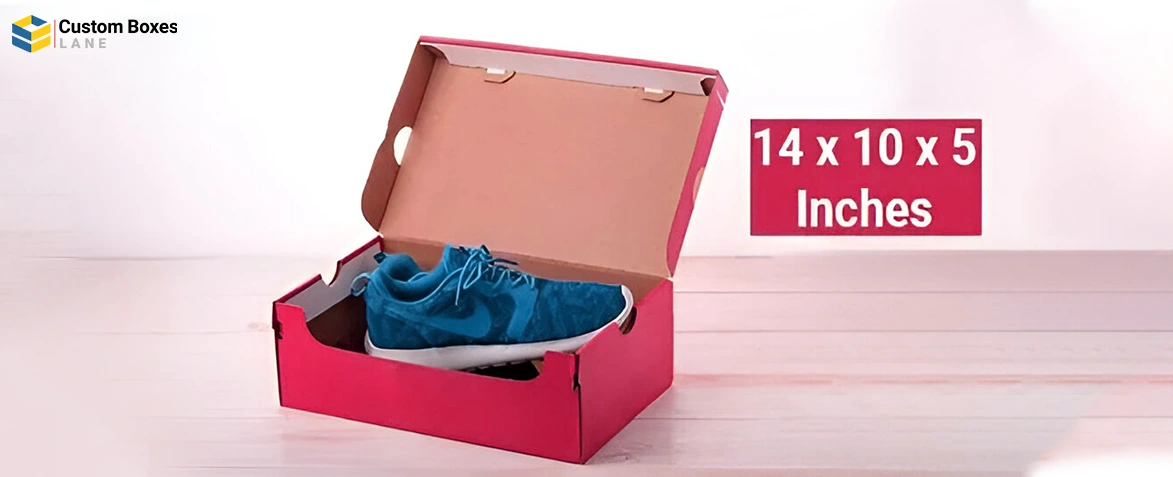
For Men Shoe Box: The size for adults is roughly estimated from 13-14 inches long, 7.5-10 inches in width, and 4-5 inches long.
For Women's Shoe Box: Typical shoebox sizes for women's shoes are 11 to 13 inches in length, 7.5 to 8 inches in width, and 4 to 4.5 inches in height on average.
For Kid Shoe Box: The dimensions for kid shoe boxes range from 6 to 9 inches in length, 5 to 6 inches in width, and 3 to 4 inches in height.
Standard Measurements of a Shoebox for Men
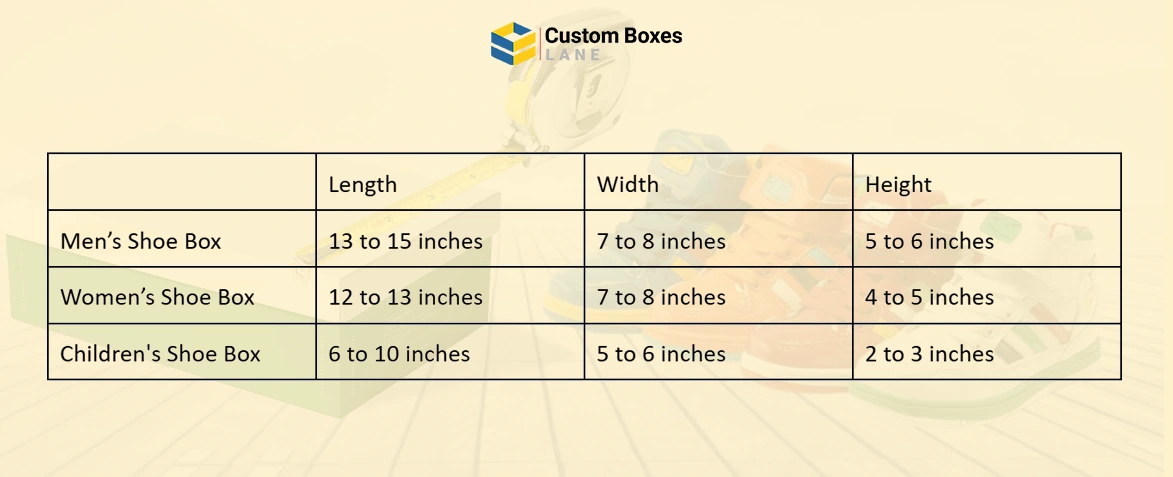
Box measurements for men, women, and children vary due to different foot dimensions. When so many options are there to pick from, going for standard practices saves your time and energy. The standard sizes of shoeboxes for men are:
- Length: 13 to 15 inches (33 to 38.1 cm)
- Width: 7 to 8 inches (18 to 20 cm)
- Height: 5 to 6 inches (12.7 to 15.2 cm)
Whether you are looking for short or long shoebox sizes, this range is considered to be ideal for shoe packaging.
Women’s Shoe Box Standard Sizes
The dimensions of women's feet are different from that of men. Women’s feet occupy a lesser volume than men’s. Here are the ideal dimensions you can choose from for making shoe boxes for women:
- Length: 12 to 13 inches (30.5 to 33 cm)
- Width: 7 to 8 inches (18 to 20 cm)
- Height: 4 to 5 inches (10 to 13 cm)
Standard Sizes for Children’s Shoe Boxes
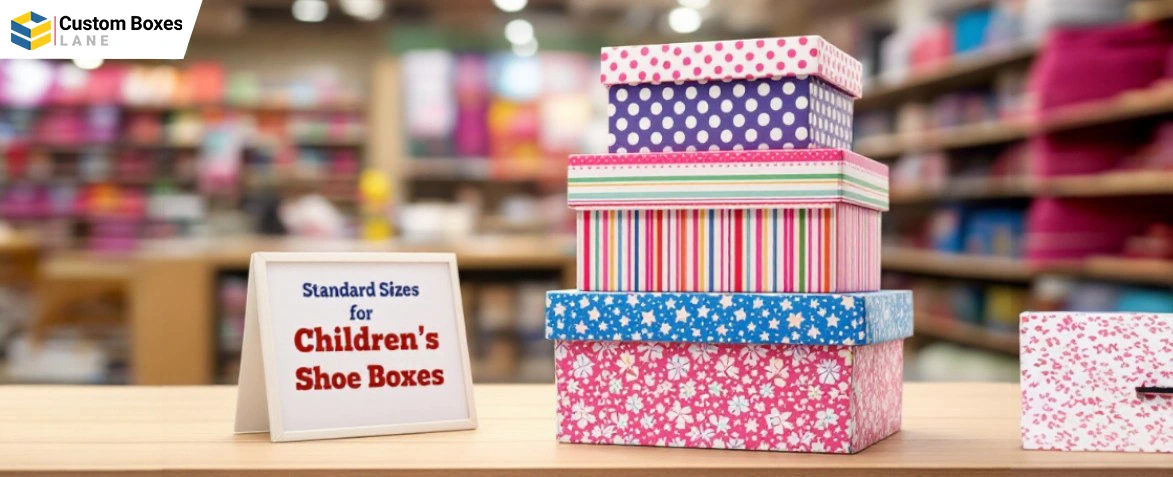
The most variety you can witness in the sizes of shoe boxes is in children’s shoeboxes. The reason is that a wide range of shoe sizes are available for children depending upon their foot dimensions. From 1 year to 14 years, the foot sizes change so does the shoe box.
Here are the standard size range of shoe boxes for packing children’s shoes:
Length: 6 to 10 inches (15.2 to 25.5 cm)
Width: 5 to 6 inches (13 to 15 cm)
Height: 2 to 3 inches (5 to 7.5 cm)
Measuring the Perfect Dimensions for Shoe Boxes
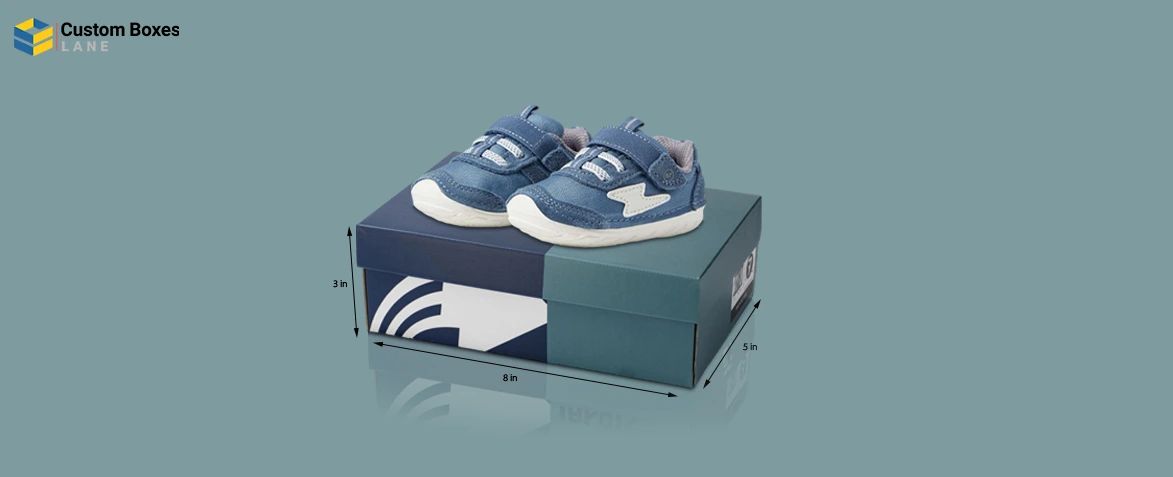
After knowing the right size of the shoe boxes, you need to create packaging boxes that meet your size requirements. To do so, measuring the shoe box dimensions is paramount. The length, width, and height of these boxes should be measured from the outside as well as inside the box.
Measuring both sides of the packaging box gives you the thickness of the material. When it comes to fitting your shoes inside the packaging boxes, measuring size from the inside matters the most. The reason is that if you measure from the outside, the thickness of the packaging material may result in false measurements of a shoebox.
Tidbit: What is the thickness of a shoe box?
The thickness of a shoe box depends upon the material that is used to create it. The standard thickness of corrugated shoe packaging boxes is 3mm to 4mm. If you go to Rigidstock to make these boxes, the thickness you should choose is 2mm to 3mm.
The Average Weight of a Shoe Box
Measuring the weight of a shoe box is also paramount if you want to ship such items over a long distance. The reason is that cargo and shipping services charge by volume as well as the weight of your products.
However, most shoe boxes don't add to the weight of your shoe boxes, significantly. These boxes mostly weigh less than a pound, but sturdy ones may weigh up to one pound.
Standard Dimensions for Shipping Shoe Box
The packaging requirements vary depending on retail shelves, online, or if you are shipping out of the country. If shipping outside, you need to follow the industrial carrier requirements. Here are some standard dimensions for shipping boxes:
Consider Choosing Average Dimensions: The size of the box used in shipping is typically 14 x 8 x 5 inches and 35.5 x 20 x 12.5 in Centimeters.
Box Weight: The average weight of a shoe box ranges from 1.5 to 10 pounds, depending on the choice of material and size. However, if you choose lighter boxes, it will be better for shipping and also help reduce costs.
Ensure Durable Material: While you should choose lighter materials, there should never be a default in robustness as you don’t want your product get damaged before it reaches customers' doorsteps. Corrugated and cardboard boxes are ideal choices to achieve both regulations and protection.
Measuring Dimensions for Different Types of Shoes
The sizes and dimensions of shoe boxes majorly depend upon the sizes and dimensions of shoes that you want to pack in them. Here is an overview of boxes for different types of shoes available in the market:
Sports Shoe Packaging Boxes
Sports shoe packaging boxes are designed in a way most of the shoe boxes are designed, yet kept just a bit heightened. The reason is that the dimensions of sports shoes resemble that of nearly all types of shoes.
Boxes for High-Heel Shoes
High-heeled shoe boxes have length and width that resemble most types of shoes. However, the height of these boxes is kept significantly high to perfectly fit high-heel shoes.
Hiking Boots Packaging
Hiking boots packaging is a bit bulkier from all the dimensions for snug fitting of boots. These boots occupy significant space creating requirements for large-sized boxes for their fitting.
Dress Shoe Packaging
Dress shoe packaging resembles most of the shoe boxes in dimensions, yet is a bit longer if shoes have a pointed front. The pointed fronts of these shoes elongate them, requiring a longer shoe box for perfect fitting.
Where to Get Custom Shoes Boxes of Required Sizes?
Now that you know everything you need to know about the sizes of custom shoe boxes, let’s discuss where you can get these boxes from. Online reputable vendors like Custom Boxes Lane are excellent choices if you want to buy shoe packaging boxes personalized in your desired sizes.
Conclusion
Knowing the right dimensions and sizes of shoe packaging boxes is paramount for fitting your products snugly. We hope the above guide provides you with suitable insights about the sizes of shoe packaging boxes and how to measure the dimensions of boxes. If you want to know more about the customization of shoe boxes or want to place an order, get in touch with us today!
The size of a shoebox is as follows:
- length of 33 cm
- width of 19 cm
- height of 12 cm
Its size however, may differ according to the brand and the shape of the shoe. Children's shoes and boots are either larger or smaller.
To determine the dimensions of a shoe box, follow these simple steps:
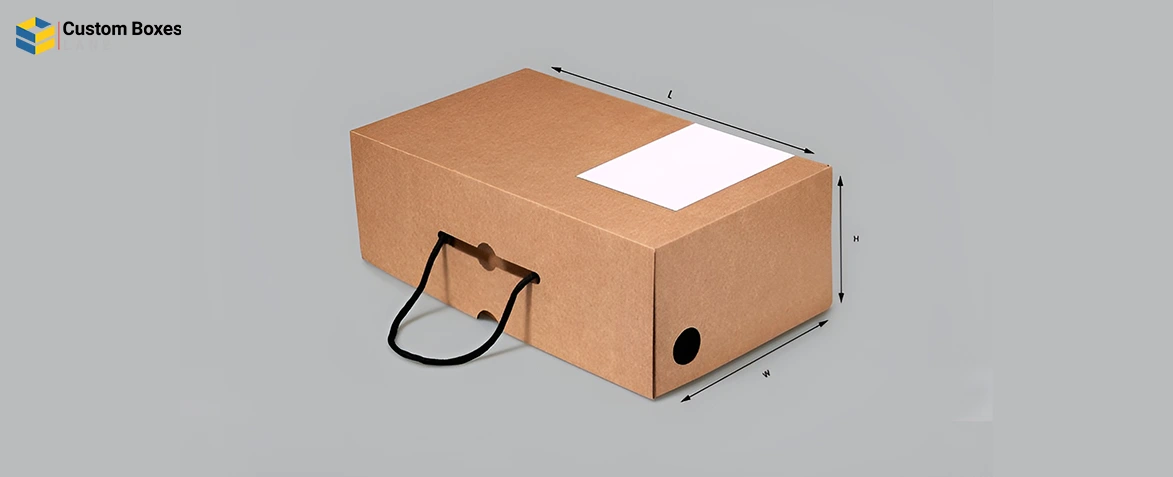
- Length of Box for Shoe: Measure the longest side of the box.
- Width: Measure the shorter side at the base.
- Height of Box: Measure from the bottom to the top of the box.
The shoebox’s measurements are:
- 13 inches in length
- 7.5 inches in width
- 4.75 inches high
No, shoeboxes will differ according to the shoes. Shoes are also available in various sizes, i.e., men’s, women's, and children's shoes. Boots and sneakers usually need a larger box.