

How to Choose the Right Food Packaging for Your Products? Explore Different Materials
Waqas Khan Pitafi 2026-05-07 13:12:00
Table of Content
Studies say that thoughtfully made food boxes, bags, or containers influence consumers' buying decisions by 74% than a plain container ever could.
So the right packaging is not about showing off your brand. It is also about making sure that the things you sell get to the people who buy them safely. Your packaging should do things. It should make customers happy and want to keep buying from you. It should also help keep the costs of getting things from stores to customers.
Explore this blog to create food packaging that is food-safe, brand potential, and sustainable.
Material Consideration According to Your Product Requirements
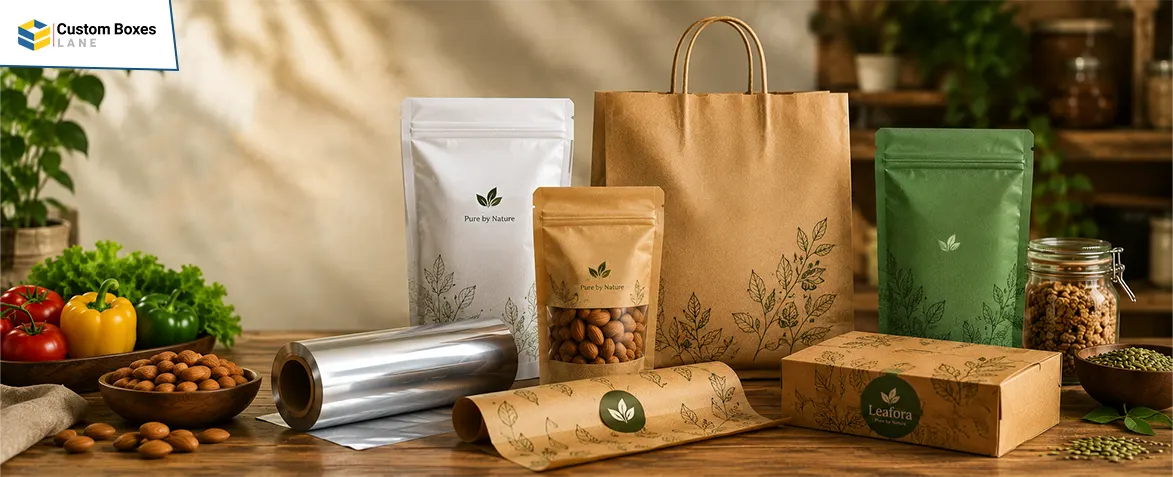
Your first step should be understanding the different types of materials. When you pick the material for the thing you are making, it can affect how long it lasts. If it is safe, and people think positively about your company.
There are kinds of packaging, and they are used for different things. It is good to know what is good about each material for packaging. Materials for packaging are really important to learn about so you can pick the materials for your product the materials for packaging. Below, we’ve explored all types of food packaging materials:
Paper-Based Materials
Paper-based materials are ideal for storing dry food items with a strong initiative towards sustainable packaging. In food packaging, these materials are really popular with brands because they can be recycled, have space for the brand name, and are safe to use with food. Look at the kinds:
- Greaseproof Paper is a special kind of paper that is smooth and dense, and it is safe for food to touch. It is made to stop oils and fats from getting through. It is produced by refining the cellulose pulp through a process called supercalendering. This results in a paper that forms a natural barrier against grease without the need for wax or plastic coatings.
- SBS paperboard, also known as bleached sulfate paperboard, is a high-quality white paperboard made from bleached virgin wood pulp. This paper offers a smooth, uniform surface for ideal premium printing and food-grade quality for direct food contact packaging.
- Kraft paper is really strong. It lasts a long time. This is because it is made in a way called the kraft pulping process. They use chemicals, like sodium hydroxide and sodium sulfide, to turn wood into pulp. Kraft boxes are used to pack lots of things, like food, dry goods, and snacks.
- Another ideal option for food packaging is folding cartons. Often used in packaging for dry goods, confectionery, and takeaway meals. They are valued for their printability and ease of customization for brands.
Flexible Packaging Materials
When you need packaging that's easy to carry and does not cost a lot, flexible materials are the way to go. They are great for packaging food because you can make them look and feel how you want. You can use them to pack all sorts of things like snacks, frozen food, and dry goods
Some of the packaging materials are:
- Mylar Bags
- Polyethylene, which is also known as LDPE
- Polyethylene Terephthalate, which is also known as PET
- Polypropylene, which is also known as PP
Flexible packaging materials like these are really good at keeping food fresh, and food storage mylar bags are the most common choice for snacks, grains, and other dry goods. Flexible packaging materials are what you need when you want to pack food in a cost-effective way.
Foil-Films and Lamination
Such materials combine plastics, aluminium, foil, and paper. This helps to provide protection, and the ability to print on them. The brand used these materials to make bags or pouches. They used them for coffee, spices, and foods that can be kept on a shelf for a time.
- Laminated Films and Bags
- Foil Pouches
- PET Lamination Films
Understand Your Product Type & Before Choosing Material
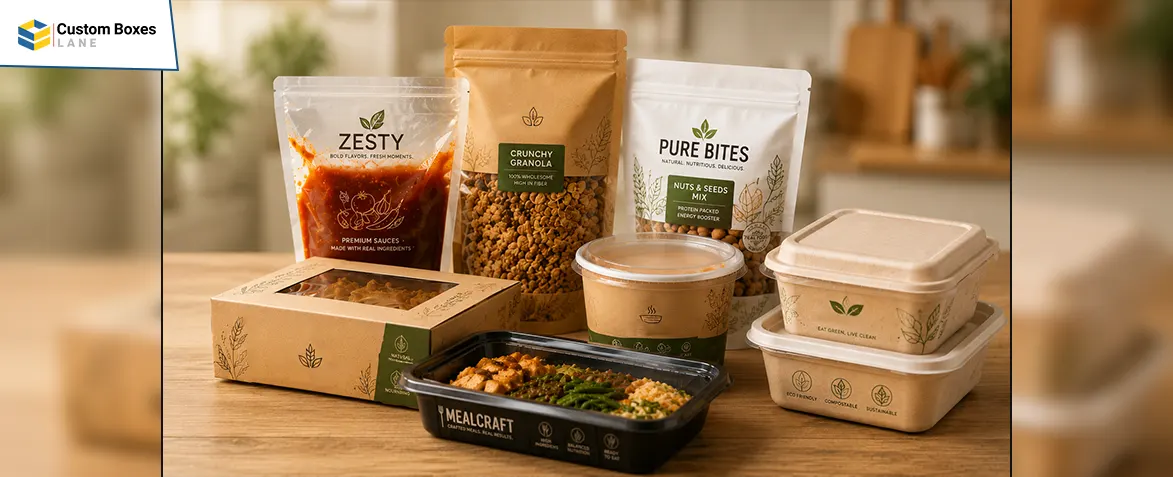
As you know, every food has a different nature; some are greasy, liquid, or environmentally sensitive or dry goods, needing extra protection. Determine your food requirements and then choose packaging accordingly.
Key Strategies for Matching Packaging to Food Type
Choosing the right packaging for specific food types can be difficult, but not anymore. For saucy foods, you should use plastic bags and pouches. Such a packaging has a special layer to keep everything fresh. These bags and pouches are also sealed tightly so that water cannot get in.
If you are packing cereal, nuts, or other dried food items, you can use paper bags that stand up or boxes. This helps keep everything dry. You can also use wraps with a layer of foil or boxes with a foil lining to keep food crunchy.
For food that you're taking away, you should use leak-resistant trays or sustainable tableware boxes that can handle hot meals without spilling. Such packaging offers convenience for customers while supporting environmentally responsible practices that modern food brands value.
Consideration of Shelf Life & Food Freshness
The freshness of your food directly impacts your branding. To do so, considering packaging flexibility to adapt to different circumstances and retail temperature is important.
For a shelf life and freshness, make sure your packaging has barrier films. They are really helpful because they block oxygen, light, and moisture from reaching the products.
You can also add a feature to barrier films, like a zip-lock or press-, to close closure. This way, products stay fresh for a time after you open them. It also helps to keep barrier films on products so they stay fresh.
Consideration of Packaging Design for Branding
Aside from food protection and preservation, packaging design also makes or breaks your brand potential. To make your food packaging visually appealing, follow these five tips to make your food packaging design useful, functional, and trend-setting:
- Stick to simple packaging so customers are not confused and lose interest.
- Choose a design theme that's easy to understand, like minimalist and informative packaging.
- Make your packaging personal by telling a story. For example, you can add QR codes, make it smaller, or add NFC scanners. This will help with logistics.
- Your brand can stand out by using clear text on your packaging. This should include your brand name, logo, and information that will attract customers.
- Finally, make your food packaging useful by adding features, like heat-sealing options.
Integrate Smart Packaging for Logistics Efficiency
Choosing the materials and design is not enough these days. Most brands also use technology in smart packaging.
- By putting things like QR codes, NFC, and sensors into your packaging, you can make logistics work better.
- These things make packaging more useful because they can monitor products, sense the environment, and let users interact with them in time, which is really useful for smart packaging and logistics and retail shelves and for the users of the products and the brands that make them, like the brands that use smart packaging.
- Through QR code, you can scan product shelf life and intelligently communicate to improve safety, convenience, and traceability across multiple distribution or storage channels.
- Other ways to smartify your packaging are by right-sizing it. Minimize excess space to reduce material costs and shipping weight.
Design Your Right Food Packaging at Wholesale
Custom Boxes Lane has deals if you buy a lot of packaging for your food products. We have nice designs for modern food packaging. If you want to know more, you can contact us today.
When you are packing food and drinks, you should use packaging materials that are safe for food. Food and drinks need to be packed in materials like paperboard, compostable cardboard, or biodegradable Kraft paper.
Here are 5 common food packaging materials:
- Metal cans
- Glass or plastic bottles and jars
- Plastic tubs, pots, and trays
- Collapsible tubes, paperboard cartons
- plastic or paper bags, sachets, and overwraps
Polyethylene Terephthalate is used for making drink bottles, meal containers, and more. It is also known as PET or PETE.