

What is Packaging? | Guide on Everything You Must Know About It
Waqas Khan Pitafi 2026-05-22 07:36:00
Table of Content
Everything we own today came to us in the best shape and structure. It would not have been possible if humans hadn’t developed the packaging. From the device you’re reading this blog to the internet modem that shares the network signals, every item demands packaging for various reasons. Here, we’ll explore what it is, its types, styles, and more. So, read on to know more.
What is Packaging?
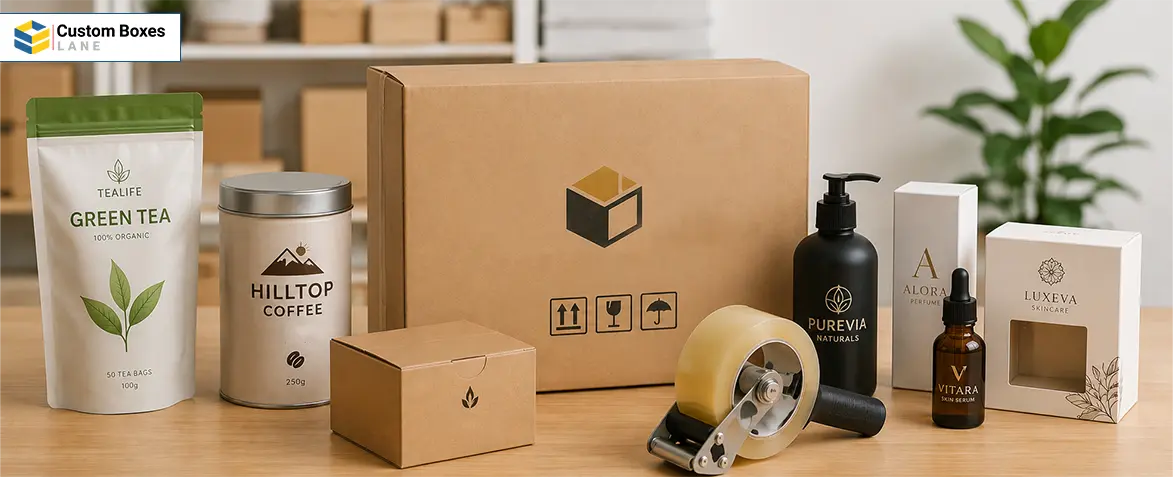
There’s no such technical explanation to it as “Packaging means any material that is sophisticatedly modified to be used for the wrapping of a product”. Its main goal is to protect the item from the external factors that can cause damage to it or degrade its quality.
Whereas the presentation is the focal point of the packaging to maximize its showcase and leave a lasting impression. The packaging designs and structures change as per the product’s dimension that caters to pin to bulky machinery and more.
Basis Packaging & Its Types
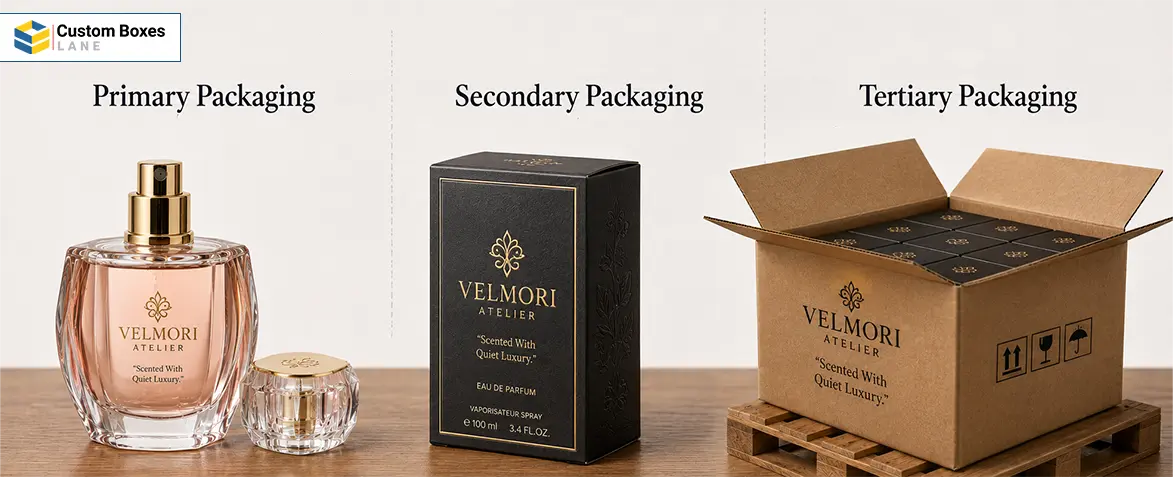
Not all packaging is created equal. Some develop for protection, while others prioritize its presentation. That’s why they’re categorized into purposeful types, and the common ones are briefly mentioned below.
-
Primary Packaging
First of all, the primary packaging is the soul of the product as it’s developed to accommodate an item inside. Without it, the existence of some items is even impossible for commercial purposes. Since it’s a must, its quality & aesthetics determine its uniqueness.
For instance, the fragrance bottle is the perfect example of the primary packaging as it accommodates the liquid content in it. Imagine the solution is packaged in something other than a sprayer bottle. The whole concept here will die as it won’t provide the functionality at all.
-
Secondary Packaging
Once the primary packaging is confirmed, the secondary packaging makes its entry, featuring a secure environment to store the product. It offers top-notch presentation as the surface of the packaging is much wider than its primary one. That’s how it is considered as a marketing tool by brands to stand out their offerings.
Meanwhile, following the same example of the perfume. Here, the box in which the glass sprayer bottle is placed is referred to as secondary packaging. It had a huge impact on showcasing the brand’s effort in showcasing their products at their best, as customers interact with it even before the actual packaging (primary).
-
Tertiary Packaging
Not so common a term for a layman or end-customer, but it’s the backbone of the shipments and logistics. The tertiary packaging refers to the bulk shipment packaging that makes the accessibility of finished products to the consumers.
For instance, the secondary boxes of the perfumes are packed in the tertiary packaging, and then they’re shipped to the retail stores and beyond. Even at the B2C level, it’s widely used as a go-to choice because it ensures safe shipping for e-commerce and direct brand-handledsales.
Importance of Packaging
The list of why packaging counts a lot may never end. But below are some of those aspects that matter the most.
-
Conveying Useful Information
Communicating when representatives are not in front of the customers is tricky. But with thoughtfully designed packaging, the issue isn’t anymore, as brands can tell the information in a professional manner. Whether it’s basic product information or the nutritional or ingredients-related info, all can be displayed on the packaging to cater to compliance and marketing aspects.
-
Storage & Distribution
Once products are manufactured its storage is the major concern because any mismanagement can lead to damage and cause high losses. While packaging eliminates these kinds of risks on all scales, it also ensures the distribution of the products, which isn’t possible if we skip the item’s packaging in the first place.
-
Deliver Value
Some products are all about showcase, and it’s only possible with bespoke premium packaging to elevate the customer's experience. Just as high-end products like jewelry items or watches must demand special packaging to leave a lasting impression, present the product at its best.
Popular Packaging Materials Options
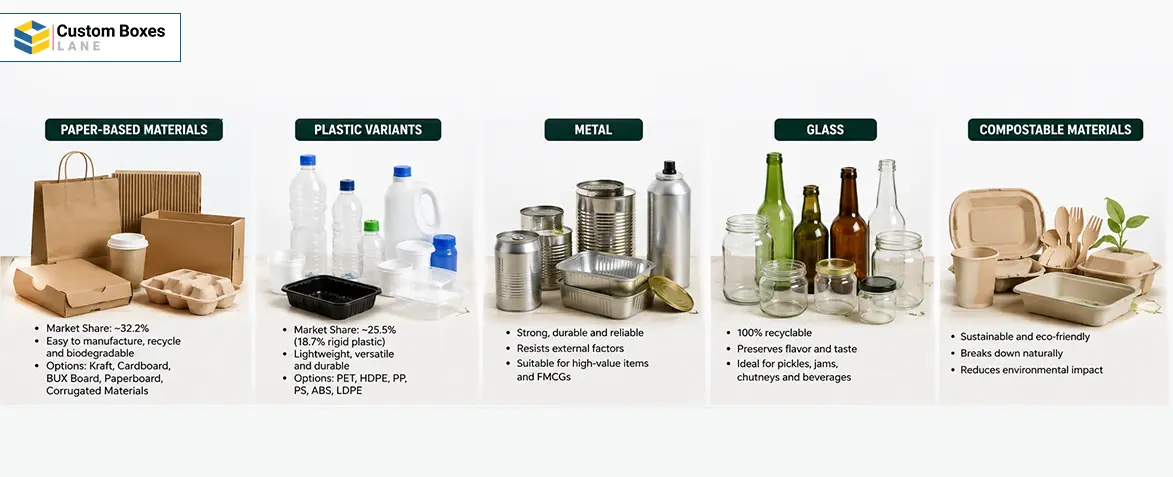
The entire structure of the packaging is dependent on its material. Some are sturdy while others are flexible, but crafting them is only possible because of their materials. Below are the common options that cater to almost all of its types.
-
Paper-based Materials
With nearly 32.2% of the market share, the paper materials are ideal for most of the packaging needs. It’s easy to manufacture and even easier to recycle and degrade, making them the top pick. Brands consider them to promote sustainability, while some of their options may include: Kraft, cardboard, BUX board, paperboard, and corrugated material variations.
-
Plastic Variants
Having the second biggest market share of around 25.5%, plastic-based material is still contributing to a major chunk of packaging needs. Or if we combine it with the rigid plastic category (18.7%), both of them represent around 44.2% of the entire share of packaging materials.
Though it’s less planet-friendly than paper, constant R&D is being followed to make it less harmful. While some of its sub-types are PET, HDPE, PP, PS, ABS, and LDPE.
-
Metal
Ranking at the third spot (technically 4th, considering rigid plastic), the metal packaging is one of the finest and most reliable materials. Its usage for packaging is widespread from high-value items to FMCGs, making it a compatible solution on all levels.
Especially at the industrial scale, metal packaging is taken as the best solution as the material is capable of resisting the external factors, which isn’t possible with the rest.
-
Glass
Just like metal, glass usage is limited, but it’s one of the recyclable materials. The products packaged in the glass material solutions are ideal for retaining their flavor and taste for the long term. That’s why they’re the go-to option for the pickles, jams, and chutneys.
Similarly, glass is considered a healthy material to replace plastic containers for water consumption. Because the microplastics in the non-BPA bottles are a major risk to health and are continuously recommended to be avoided by health professionals on all forums.
-
Compostable Materials
With the innovation in packaging materials, there are some new options available in the market that revolve around sustainability. The appearance of these materials may seem similar to the traditional ones, but their properties are exceptional. Some of the compostable material choices include:
- Bamboo
- Wheat Straw
- Polylactic Acid (PLA)
- Bagasse (Sugarcane Fiber)
- Seaweed-Based Materials
- Mycelium (Mushroom Packaging)
The Process to Craft a Fully Functional Packaging Solution
Whatever product your company offers, you have to develop a reliable packaging that showcases the best way. Some of the steps to craft a packaging are simply following the steps below:
- Product Dimensions: The size of the product determines the demand for its packaging needs. Just like small items demand a compact box to accommodate them. While bulky ones need a wide box to let the product settle down inside without any concerns.
- Target Audience Demands: For regular products, a simple packaging works fine. But for expensive items, it must be packed in the bespoke box that is crafted with perfection from the bottom to the top and beyond.
- Material Selection: As mentioned above, there are multiple materials for the packaging. You have to pick the ones that fulfill your packaging demands by all means and outshine your presentation.
- Branding Customizations: Once the packaging is developed, you have to print brand logos, add embellishments, and customize it for the brand’s theme. While around 70% of customers are influenced by the packaging of the product, this can make you break the packaging game from scratch.
What Packaging Suits Your Products?
The packaging world is like a deep sea with countless cliffs. One design that works for a brand may not fulfill the needs of the other, and vice versa. Other than the one-size-fits-all approach, brands have to go distinctive with customized options to stay competitive and stand out.
If you’re unsure about what works for your brand and what doesn't, it’s better to consult with an expert to save your time and energy. You can reach Custom Boxes Lane by dialing (904) 899-9020 or write your query to sales@customboxeslane.com for a detailed response.
The term sustainable packaging refers to the eco-friendliness of the materials, as well as how degradable they are. For instance, green packaging materials such as Kraft and cardstock options are easily decomposable and settle into the soil.
The preservation of the items is a major feature of the packaging to retain its best state. While its presentation and branding purposes also count a lot. Because without these aspects, the essence of the packaging remains incomplete and boring.
Each product is built for a different kind of audience. For some, it’s all about the presentation, while sometimes safe shipping is the priority. That’s one of the reasons behind the diversified demand for packaging, even with the same materials.