In Stock
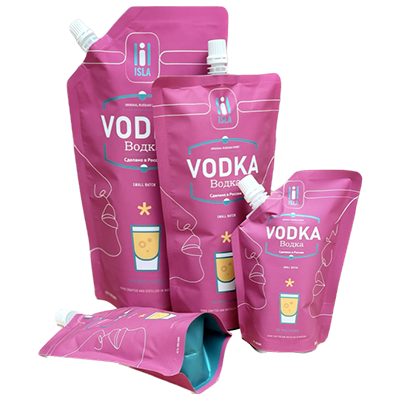
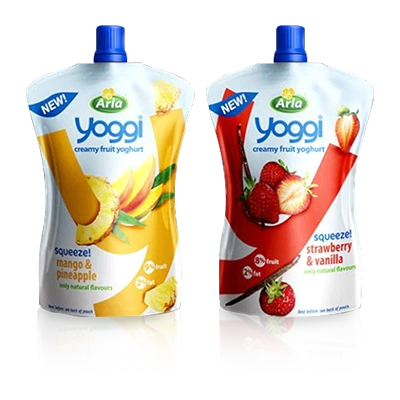
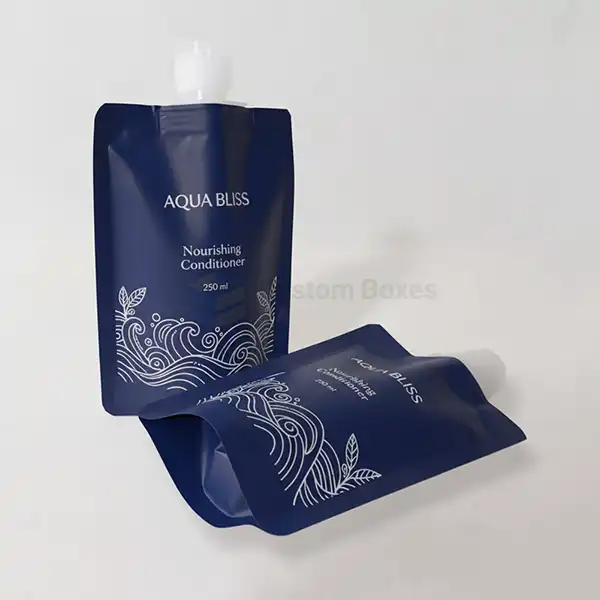
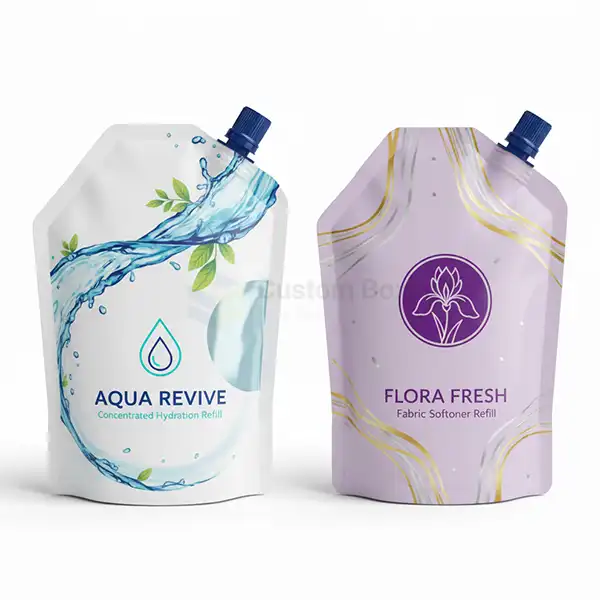
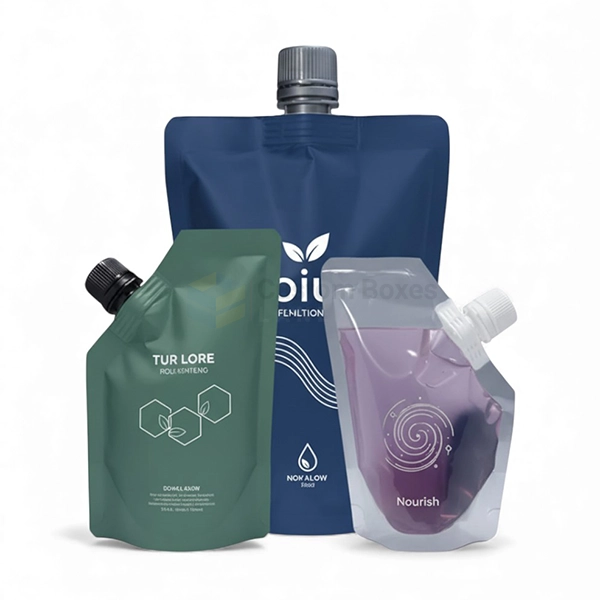
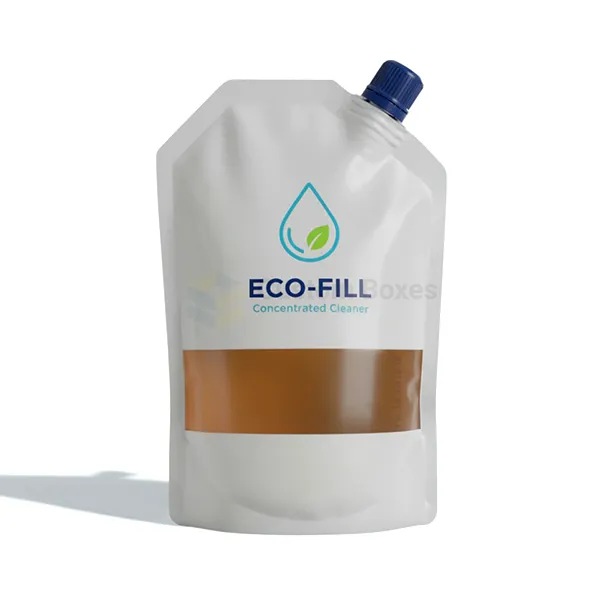
Packaging of semi-solid and liquid items is challenging due to the risk of leakage and product spoilage. However, the most convenient and eco-friendly Mylar and kraft refill pouch with spout is designed to keep the product safe for a longer duration. Ideal for food, cosmetics, gels, healthcare products, and liquid items.
Customize these popular bags with your brand logo and engaging designs that encourage shoppers to purchase. Fill out the quote and enjoy free shipping and bulk discounts!
 GET CUSTOM QUOTE
Product ID: 1285
|
Box Style |
Mylar Bags |
|
Dimension (L + W + H) |
All Custom Sizes & Shapes |
|
Quantities |
No Minimum Order Required |
|
Paper Stock |
10pt to 28pt (60lb to 400lb) Eco-Friendly Kraft, E-flute Corrugated, Bux Board, Cardstock |
|
Printing |
No Printing, CMYK, CMYK + 1 PMS color, CMYK + 2 PMS colors |
|
Finishing |
Gloss Lamination, Matte Lamination, Gloss AQ, Gloss UV, Matte UV, Spot UV, Embossing, Foiling |
|
Included Options |
Die Cutting, Gluing, Scored,Perforation |
|
Additional Options |
Eco-Friendly, Recycled Boxes, Biodegradable |
|
Proof |
Flat View, 3D Mock-up, Physical Sampling (On request) |
|
Turnaround |
4 - 8 Business Days, RUSH |
|
Shipping |
FLAT |
There is hardly any convenient packaging that provides long-term food preservation, convenience, and spillage protection as effectively as a refill pouch with a spout does. That’s why custom spout pouches are businesses' go-to solution for effective marketing and high-end security. You can customize these bags with a multi-film layer that blocks light, moisture, and humidity, preventing product degradation inside the refill pouch to maximize the value of your brand and foster consumer loyalty.
The outside part, as well, can be customized for walking brand promotion. With high-end printing techniques, you can personalize them with engaging designs, featuring your logo embossed on the front, accompanied by lamination or gloss finishes that reinforce premium brand identity.
If you’re wondering whether these pouches work well with your branding as well as extending shelf life, then be assured, as refill pouches are made of a material infused with laminated films and a PET multilayer plastic, which offers high tensile strength and allows easy dispensing of the contents. This makes them especially suitable for products like refillable baby food squeeze pouches, where hygiene, controlled dispensing, and freshness preservation are essential. Which product will remain in the best shape inside these pouches? Here’s the list:
The refill pouch with a spout comes in other materials as well, and don’t worry about protection; these materials work great:
The honest limits, which make the section credible, are that a refill pouch with a nozzle is a lighter single-use pack, and the sustainability benefit comes from the bottle being reused, not the pouch. Multilayer pouches are also harder to recycle than a mono-material bottle, so the honest framing is ‘less material, harder to recycle’ rather than an unqualified environmental win. The same Green Guides discipline applied across the specific claims: substantiated, no unqualified ‘eco’ language.
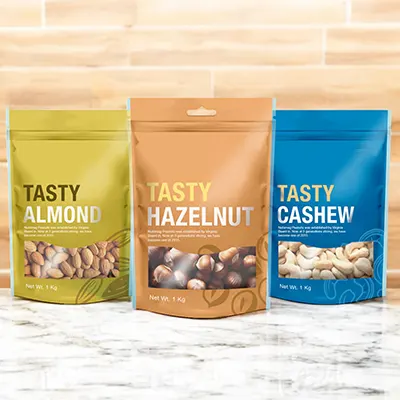
Refill pouch with spout is a versatile packaging choice that is widely used for food items and household chemicals. Food packaging requires food-grade, FDA-approved packaging materials to preserve freshness, aroma, and taste. These pouches are mostly used for the following products and household items:
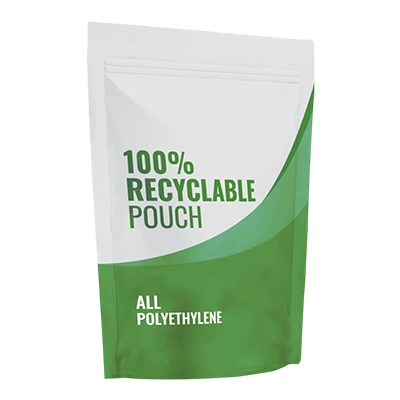
PET or kraft paper is used to create the outer layer of a refill pouch with a spout. Aluminum foil or VMPET is used to create the barrier layer to protect the contents. PE or CPP layers are crafted to provide a surface suitable for the sealing objectives. To make these pouches recyclable, you need to use mono materials and biodegradable kraft paper options.
The following are the steps that are followed to create, print, laminate, and fill these pouches:
Every consumer has experienced it, and no supplier page names it: pouring from a flexible pouch into a narrow bottleneck goes wrong in three specific ways. Glugging — as liquid leaves, air has to get back in; through a narrow spout, the two fight, the flow pulses, and the pulse is what splashes. Dribble and run back — liquid clings to the spout lip and runs down the pouch when you stop pouring. Residue — a floppy pouch collapses unevenly and traps product in the corners, so the customer feels they paid for liquid they cannot get out.
Table: Refill Pouch with Spout, Designer Lever, and Its Effects
|
Design lever |
Effect |
|
Spout Diameter |
A wider spout lets air return alongside the outflow and pours far more smoothly than a narrow one; narrow spouts suit dosing, wide spouts suit refilling, and a refill pouch should almost always be the wider option. |
|
Spout Position |
Corner-mounted spouts pour with more control than top-centre ones for decanting (the hub covers position selection in depth. |
|
Pouch Geometry |
A shape that funnels toward the spout as it collapses drains more completely than a square-bottomed one. |
|
Viscosity Match |
Thick products (pastes, gels, thick detergent) need a wider spout still, or they cling and take an uncomfortably long time. |
Choosing the volume ratio — a refill sized to exactly one bottle is an ideal and the simplest option for the customer and the easiest to communicate. A refill holding two or three bottles’ worth improves the material saving, but requires the customer to store a partly-used pouch, which needs a genuinely resealable cap.
Considering the neck compatibility — the spout has to clear the bottle’s neck and ideally sit inside it while pouring; measure the bottle, not just the pouch. Resealability — it is more important if the refill is larger than one bottle, the cap is doing real work between uses, so specify accordingly. At the end, print the instruction — a short, explicit refill instruction on the pouch for the; brands consistently underestimate how many customers have never refilled anything and will simply cut the corner off.
Modern consumers get excited when their daily necessities come in sophisticated packaging, so they will use them frequently and remember your brand forever. That’s why we give you the chance to print your brand identity, story, and values on the surfaces of refill pouches with a spout. Choose your ink:
One of the most important elements of branding is that your product gives a premium look. But is it possible without high-quality materials? Yes, you can customize your refill pouches with a spout to create a premium-looking product by adding finishes after printing. And the good news? All these customizations come with great savings and discounts. Choose your finish:
Get wholesale refill spout pouches in your required size and style. You can customize them in any style, for example, stand-up pouches for easy handling, and die-cut handles offer enhanced portability to the customers. You can also choose a customized size for your pouches. You will receive your order within 10-12 working days. Contact us today and buy in bulk to receive a wholesale discount, free design support, and shipping.
A spout pouch is made of kraft and Mylar. These packaging materials are ideal in terms of durability, flexibility, and printability. These features make these pouches perfect for your brand.
A spout pouch can be sealed with screwable caps, which offer tight sealing. Such tight sealing offers excellent protection to products without compromising the reusability of the packaging.
For safe and secure refilling of a pouch without spilling, you need to consider the following steps:
One large bottle or pouch for 500ml to 1 liter for beauty and personal care such as soap, shampoo, or lotion is best for home consumption. It is cost-efficient, reduces plastic waste, and is ideal for the fewer refills process.
Refill pouches are better for the environment during production and shipment. They are ideal for less plastic consumption and lower transport emissions. However, they can be hard to recycle and might raise greenwashing concerns, which are strong drawbacks to these pouches.
No. These pouches are not fit for use with food and cleaning products, as they might produce toxic chemicals that are risky to human health. Rather, you should use separate, clearly labelled pouches for food storage.