

Kraft Paper vs. Cardboard: Which Serves the Environment?
Waqas Khan Pitafi 2026-01-08 07:47:00
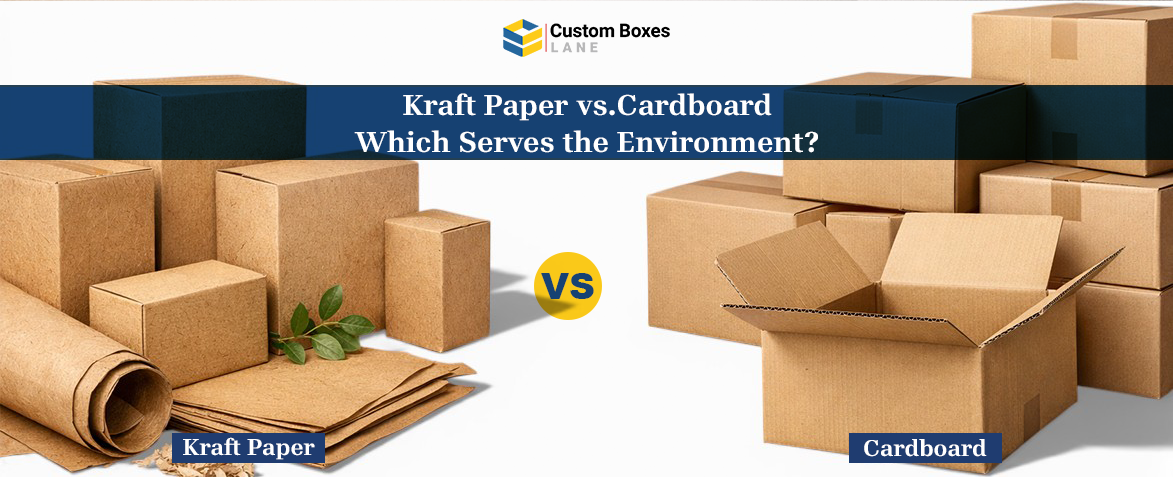
Table of Content
With the uprising trend and future forecast, Kraft paper is projected to achieve a milestone of USD 14.24 billion by 2030. Compared to the Cardboard material market size of USD 238.77 billion in the same period. The huge difference between them may shock you for a moment, but it’s totally a numbers game and is justifiable because of the application of both materials.
The reason why the cardboard market size is multiple times larger than kraft is its usage in almost every industry, and even for the shipment of the kraft boxes themselves. Yet, here we’ll explore the environment-related aspects and what makes a material a sustainable option.
What is Kraft Paper?
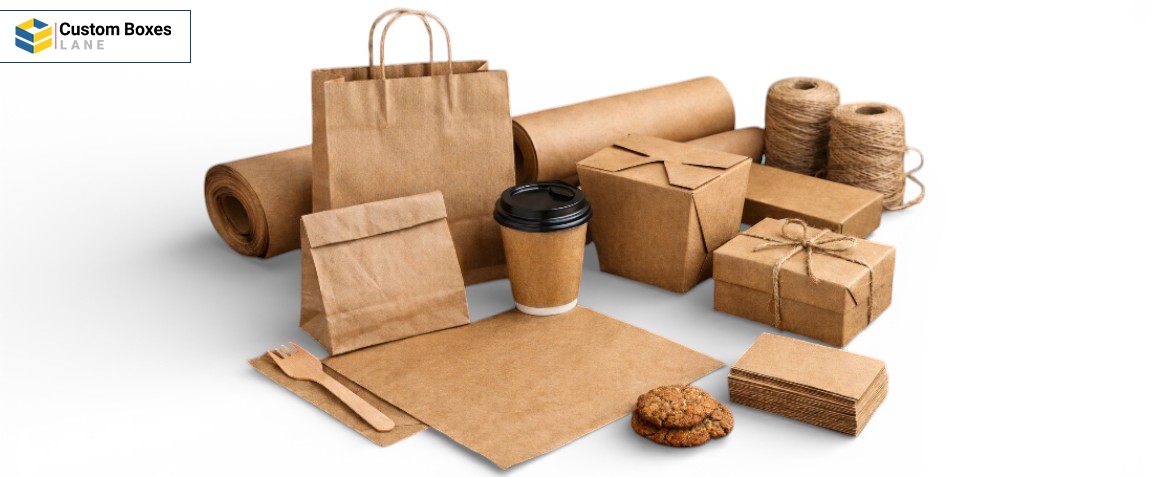
The paper produced after processing of wood pulp into a sleek layer is known as kraft. This brings us a strong and lasting material which is used in a range of consumption, storage, and shipping packaging needs. Since the material is brown, it mimics the natural wood appearance, which can be bleached and further processed to turn it into multiple colors.
One of the most common products is the Kraft paper bags, food wrapping sheets, business cards, custom packaging, and more. Its usage landscape is so wide that you may even get tired of counting. Its decomposability is something that makes it a top material in the green material competition.
What is a Cardboard?
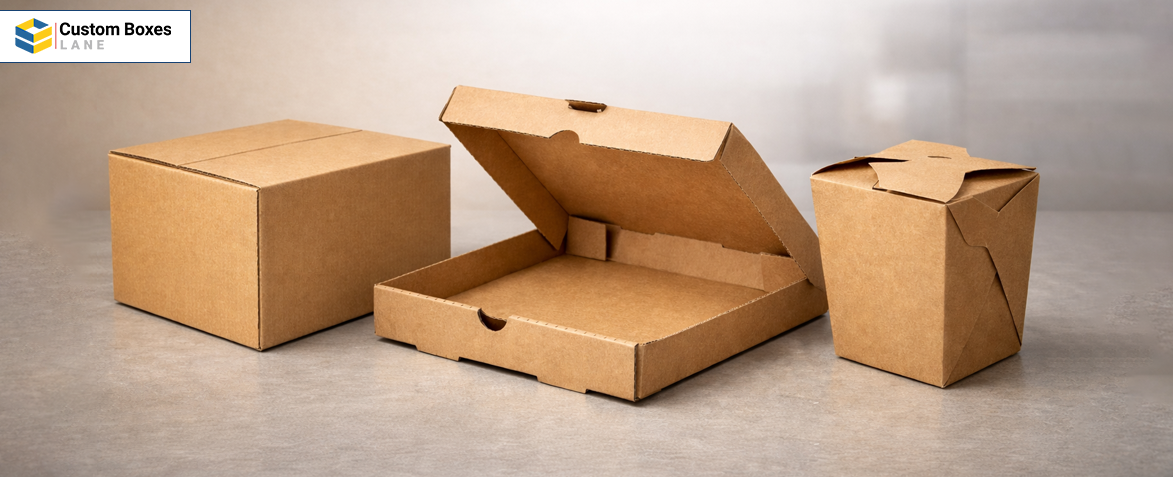
Cardboard is a multi-layered material of processed pulp attached in a precise manner to develop a strong and sturdy material. The overall structure of the cardboard is built to provide a cushion, making it ideal for shipping and logistics. Coming to its ingredients, these include virgin fibers and recycled paper (either fully or partially processed).
For instance, some of the applications of the cardboard material are pizza boxes, take-out boxes, shipping corrugated boxes, etc. All serve the same purpose — to provide a robust and secure packaging solution from small-scale to bulk needs and beyond.
Timeline of Degradation of the Packaging Materials
Since we’re talking about the eco-friendliness of the materials, it would be unfair if we didn’t discuss how much time each material takes to settle into the soil. Have no idea? No worries, that’s why we’re mentioning those aspects in detail here.
-
For Kraft
Kraft is among those materials that decompose 100%, leaving no footprint behind. The typical timeline of the degradation of the kraft material is around 2 weeks to 3 months, depending on the provided environmental conditions.
For someone who has no idea about the decomposition timeline, this timeframe may seem long, but after comparing it with the alternatives and other materials, it’s exceptional. This very short period means how quickly it impacts the soils without leaving any harmful effects on the environment.
-
For Cardboard
On the second number, we have the cardboard materials, which may take around 2 to 5 months, a bit longer than the kraft material. The reason for it’s more time to settle down is because of the multi-layer and thickness.
So, does it take more time to compost? Yes and no. Yes, because it quickly biodegrades in its category. No, because if we compare it with the Kraft material, this may take some more months to decompose.
Structure of the Material & Its Role in the Greener Planet
The physical appearance of the packaging material has a direct impact on the process of degradation because it assists or resists the composability. Below is the difference between the two materials we’re evaluating.
-
Kraft Paper
Plain, clean, and mostly smooth. That’s all Kraft paper offers. Its thin layer complements the computability and recycling processing, reducing the timeline. If the kraft paper is coated with some laminated material, this resists the decomposition process and may even leave some toxic elements behind. That’s why there’s also a difference in 100% kraft material and the ones with some add-ons.
-
Cardboard
Technically, the structure is similar to the kraft paper but with multiple molded and patterned sheets of pulp that degrade layer by layer. That’s why when the corrugated cardboard is decomposed or recycled, it takes some more time than its competitor, the kraft.
However, it still ranks as one of the top decomposable materials that don’t demand any chemical or any element to settle down unless the environment is unfavorable.
Cost Aspects to Count on for Packaging Material
There’s not much difference between the two materials, as they cost nearly the same unless added with add-ons and tailored as per the brand’s packaging needs.
-
Kraft
Kraft is one of the affordable but reliable packaging solutions for retail and food packaging needs and beyond. These boxes and bags are easy to manufacture in large quantities, keeping their consistency aligned while being kind to the environment throughout their journey.
-
Cardboard
In the shipping boxes category, cardboard is the top packaging material available at competitive costs. Its durability ensures the products are affordably delivered to their destination while keeping the cost of the logistics minimized in terms of shipping weight.
Myths About Green Packaging Materials You Should Know
Following the above-mentioned aspects, there are some common misconceptions that are associated with eco-friendly packaging materials. Some of them are briefly mentioned below:
-
Too Costly
Material like rigid is ideal for luxury packaging solutions, but they’re too expensive for a small or striving brand to count on. That’s not the case with both Kraft and cardboard materials, which are affordable for all levels of brands and contribute to environmental efforts.
-
Can’t Modify the Packaging
For those who think that sustainable packaging has limited customization, it’s a red flag. This packaging material can be modified into any style or shape to cater to the unique products’ packaging needs without compromising on the quality-related aspects.
-
Opting is Difficult
Changing the packaging isn’t like cutting a piece of cake, but still manageable for any brand if they want to do so. Rather than changing it for all products, it’s better to opt for the green packaging for one segment and replicate the process for others, too.
-
All Sustainable Materials are the Same
This depends on the material quality and its ingredients. Some are completely made from recycled substances, while others are made from wood pulp featuring sustainability. Since one doesn't have control over how the materials are proceeded you can go for the packaging that aligns with your branding needs.
-
Customers Don't Count on
Totally wrong. Indeed, users are highly influenced by the packaging of the product as it motivates them to make their purchase decision. Beyond that, they start taking even more interest when they realize the efforts you’re counting on to develop a sustainable box that complements the planet’s greener vision.
-
Limited to Specific Businesses
Another myth about eco-friendly packaging is that it’s for the cosmetic, art, and craft business. Though it suits them the most, any business can utilize them for the mutual benefits of the business and the planet. That’s why Kraft and cardboard are among those materials that have versatile usage in almost every industry you name it.
-
Just a Trend Thing
Multiple businesses take the green packaging, either of kraft or corrugated cardboard, as a trend. But this isn’t true by any means. Although there’s word of mouth when it comes to eco-friendly packaging options, the
-
Quality is Compromised
You’re right about some aspects of the eco-friendly packaging because it doesn’t provide the same robustness as plastic or synthetic materials. But wait. This doesn’t mean that it can’t be established in the green materials. Indeed, they’re crafted to provide enough strength that can hold the product without losing its structure beyond delivery.
-
Difficult to Find a Vendor
Finding a dependable company for green packaging is indeed tricky for new or even established businesses. But with top wholesale vendors like Custom Boxes Lane, you don’t have to worry about these aspects. They are providing a full range of customization options from materials to printing and finishes.
-
The ROI is Not Transparent
In marketing, what gets viewed is conversions. Isn't it? But investing in the packaging and especially in the green packaging is something that counts a lot, but may not bring you the result that you want to see. It’s something that penetrates to the foundation of the brand and builds a strong reputation.
Who Wins the Sustainability Race?
Since you’ve read the comprehensive difference between the two material features and their distinctiveness. It’s crystal clear that kraft paper is superior to cardboard in terms of eco-friendliness. Yet, the properties of the cardboard material aren’t deniable at all, which in itself is amazing for diversified packaging purposes. You can choose from the one that fulfills your packaging needs while being kind to the environment.
Which One is Best for Your Brand? Kraft or Cardboard
So, this question is a bit tricky to answer because there’s no right or wrong debate here. Both of the materials are great in offering a reliable packaging solution that covers all aspects of needs. That’s why for the brand who want to portray and market their product as top when it comes to sustainability, there’s no material better than kraft.
In contrast, for the brand that demands to develop a robust and sturdy packaging, cardboard caters to this need and provides a practical packaging solution. Thus, if your brand is claiming eco-friendliness without compromising on packaging quality, cardboard is your green ticket to go with.
Partner with Trusted Packaging Vendor & Avail Exceptional Perks
We understand the nuisance of finding and contracting with a packaging vendor who can comply with the green regulations and provide excellent service. With us, you’re all covered, whether it’s for custom kraft or any type of cardboard packaging needed.
We provide you with full design support to develop the packaging solution that stays in its shape for a long time and also contributes to a cleaner, greener vision. Want to further inquire about our offerings? Dial now (904) 899-9020 or write to sales@customboxeslane.com for a comprehensive response from the Custom Boxes Lane expert packaging team.
The Kraft-made boxes can be made sturdier with multiple layers to develop robustness. While cardboard in itself is stronger, ideal for versatile packaging needs. So, both of the materials are great options for robust needs.
Why not? Kraft is one of the best options to pour soups, noodles, and serve fried items such as French fries, etc. It offers an on-the-go packaging solution for take-out restaurants and stalls.
Yes, both materials are microwave-safe, and you can easily heat the food-related items in them. This reduces the hassle of extracting and then repacking the produce that takes more time and effort.
These boxes are ideal for products ranging from cosmetics to beverages and apparel. You can consider cardboard boxes or cartons for your brand to deliver the items in pristine condition and leave a lasting impression on the buyer.
The cardboard boxes stay in their shape for long periods of time unless they’re exposed to moisture. The liquid makes the structure of the box saggy by absorbing the wet content, resulting in deformation or damage.
Not at all. Both of the material boxes can be printed with any printing technique utilizing the CMYK inks to produce premium-quality graphics. So, don't worry about it, as you can expect the same detailed graphics on the paper as on the digital version of the mockup.