

Prototype Packaging: The Complete Guide to Types, Costs & Turnaround
Salman Shahid 2026-11-04 10:21:42
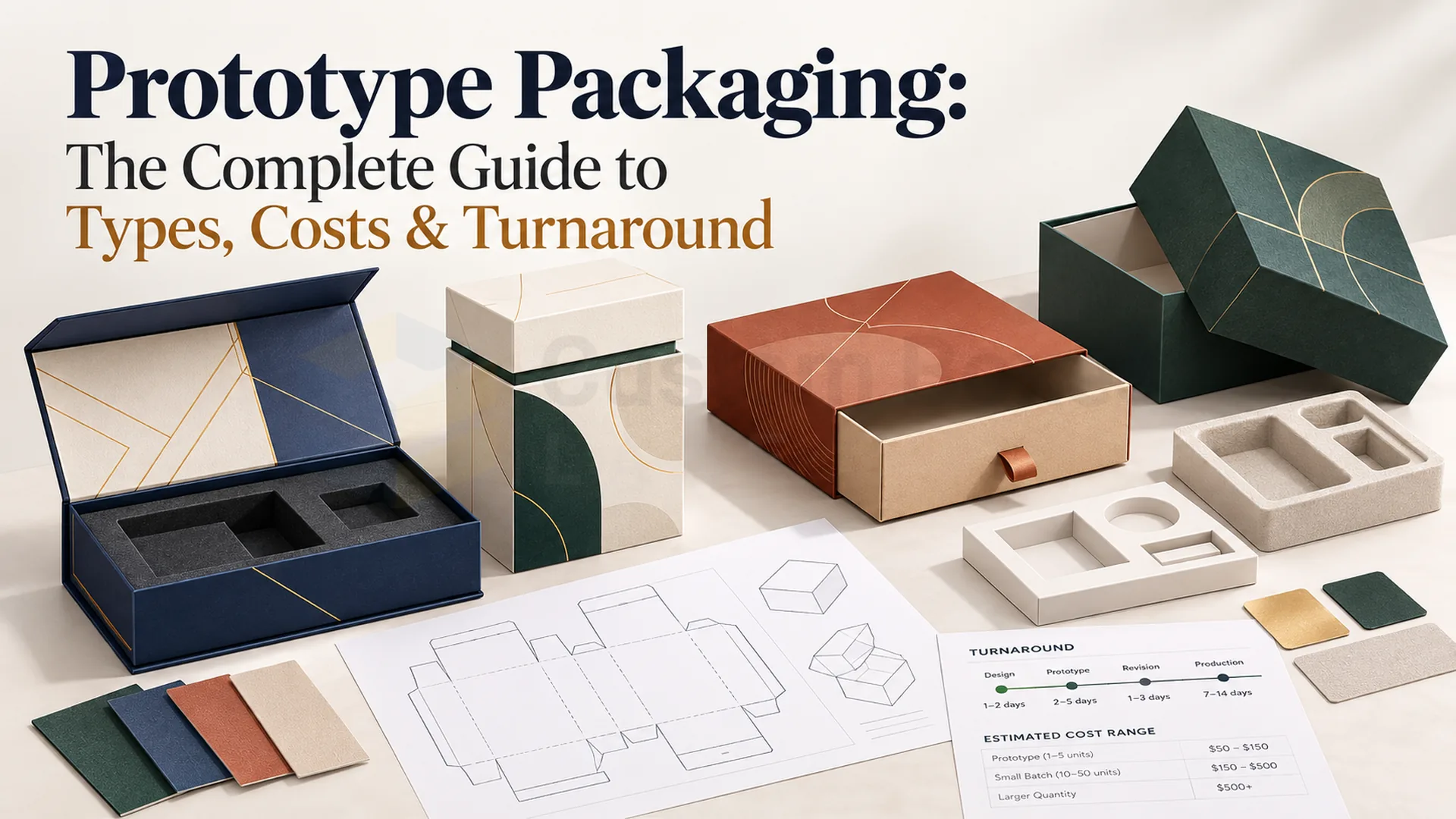
Table of Content
Presenting your high-end, premium, and luxury products in packaging that is not a good fit or lacks appeal might cost you the loss of potentially large customers. Or, by asking for a prototype packaging for your brand, you might save big losses and help your brand retain loyal customers in the long run.
Continue to read to learn the significance, types, turnaround times, costs, and other related topics in this comprehensive article.
The Power of First Impressions
The unboxing economy plays a vital role in defining that physical packaging is the ultimate touchpoint for modern Consumer Packaged Goods (CPG) brands. The financial and reputational risks of moving your product packaging straight from digital 3D design to mass production might cost you more than you can think of.
Choose a functional or visual sample of a product’s packaging to check in detail the form, fit, and visual appeal before full-scale manufacturing.
The Fidelity Ladder: Mockup vs. Comp vs. Prototype vs. Sales Sample
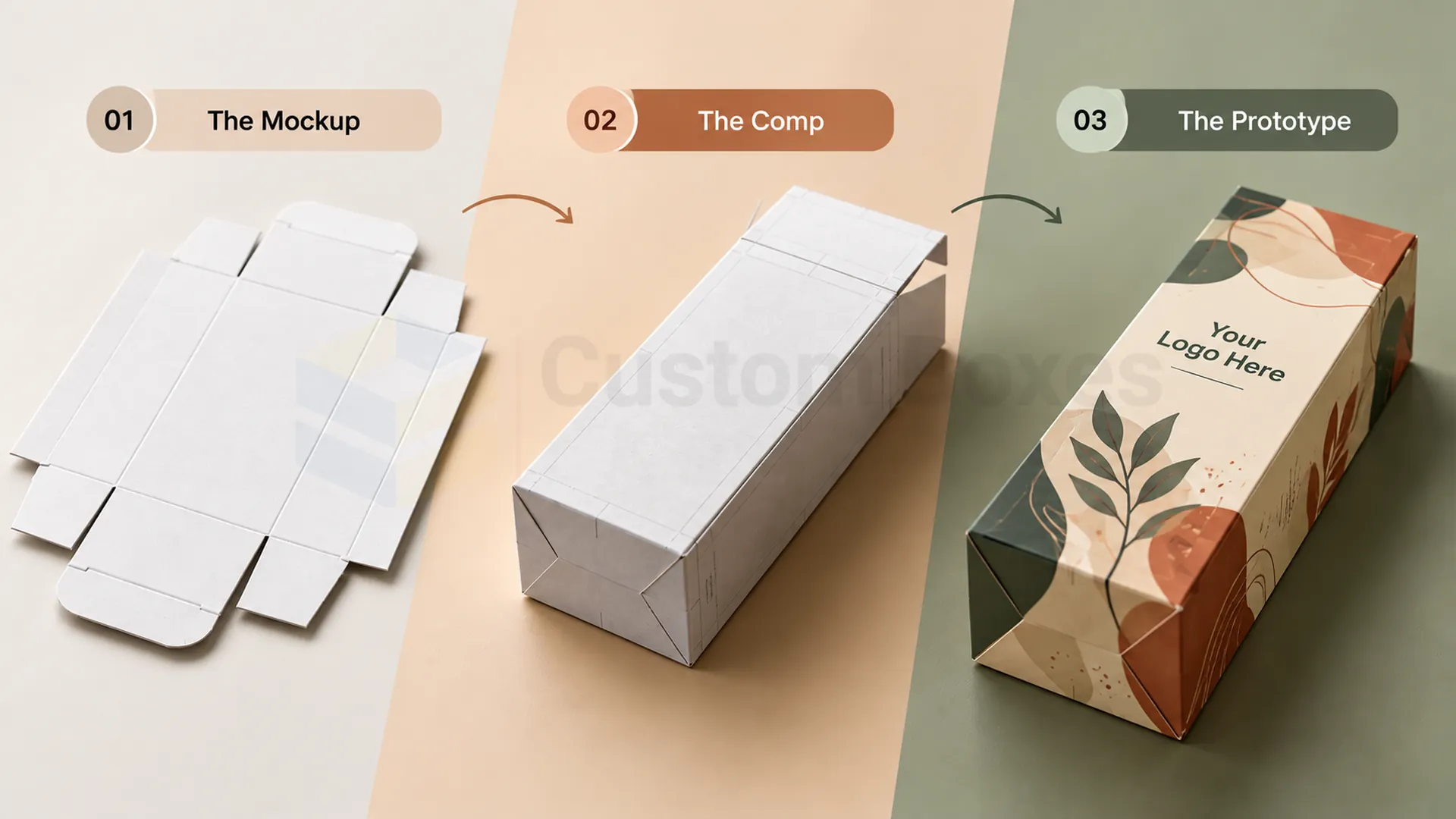
The progression of product design and development model, checking every step in detail how the final market-ready packaging would perform in the end, is a true fidelity ladder. It starts from a design idea, goes through a mockup, and passes from different stages and models, before it finally approves for products in bulk quantities.
Let's break down the components, elements, and hierarchy of packaging development:
- The Mockup: Mockup is a quick, low-fidelity 3D shape to check basic sizing and dimensions.
- The Prototype: A prototype is a functional test piece used to evaluate structural integrity and product protection.
- The Comp: A comprehensive is a high-fidelity visual model showing exact colors, graphics, and finishes, primarily used for design approval.
- The Sales Sample: The sales sample is a highpoint of pre-production—indistinguishable from the final retail product, used for pitch meetings and trade shows.
The 4 Main Types of Packaging Prototypes
Digital 3D mockup at the physical phase is a 3D virtual model is in fact a mimic final look, which is best for early stage design approval, colorway testing, and stakeholder presentation without material waste. The following are the major four types of packaging prototypes:
- Visual & Aesthetic Prototypes: Focuses entirely on branding, shelf impact, and graphics.
- Functional & Structural Prototypes: Focuses on unboxing mechanics, durability, closures, and product fit.
- Material Testing Prototypes: Evaluating different substrates (e.g., kraft paper vs. cardboard, sustainable plastics).
- Pre-Production Samples: Final validation pieces made on actual manufacturing machinery.
Structural Packaging Prototyping: Format by Format
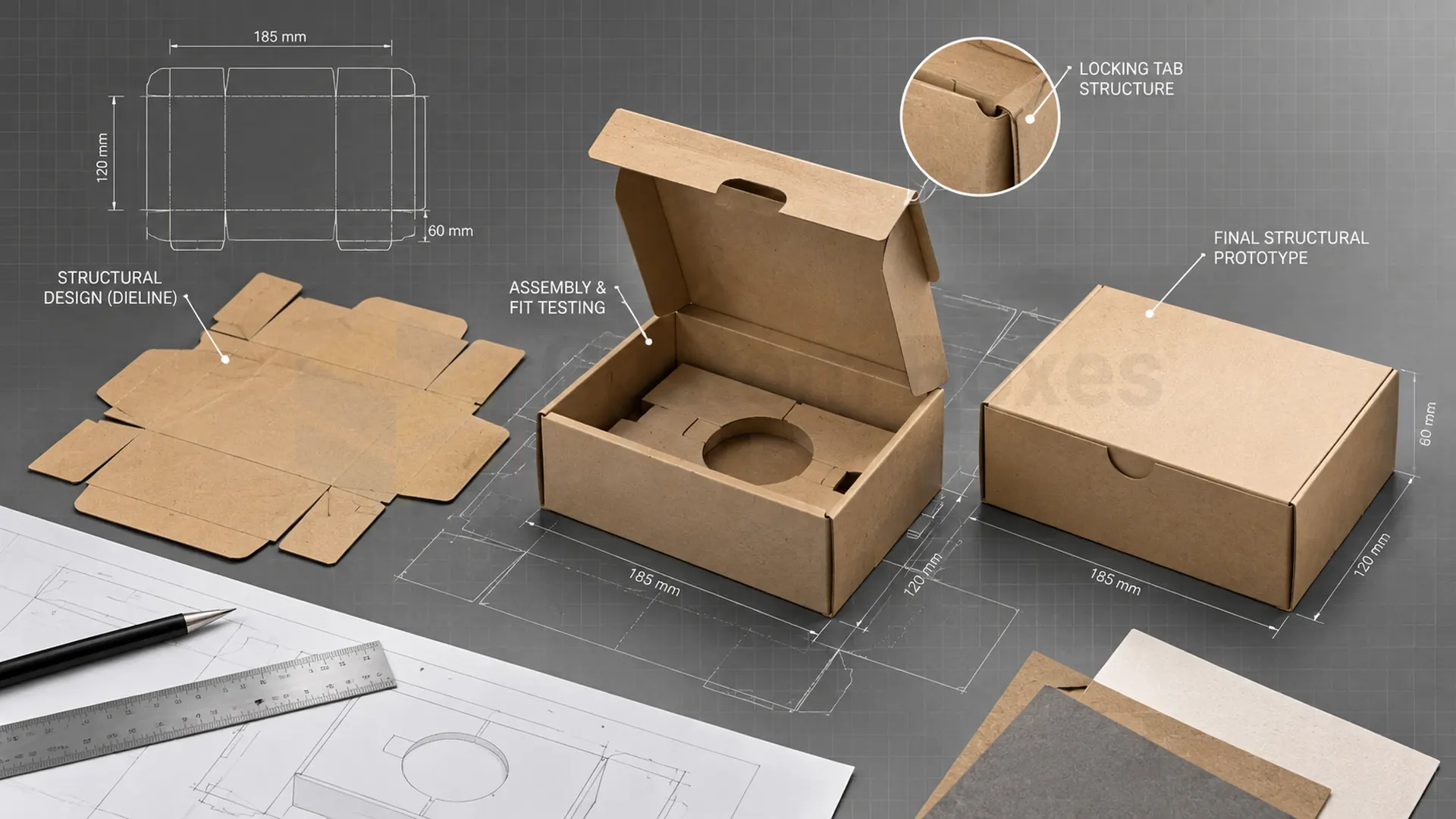 As a variety of packaging structures are available, so the different types of prototype packaging you should consider. Here you can find how prototyping adapts to different product form factors to ideally evaluate before your make huge investment in your custom packaging:
- Rigid Boxes: Testing luxury feels, magnetic closures, and premium rigid foam inserts.
- Folding Cartons: Evaluating scores, tuck flaps, and high-speed filling compatibility.
- Flexible Packaging (Pouches and Bags): Testing barrier properties, tear notches, and gusset behavior.
- Corrugated Shipping and Subscription Boxes: Prioritizing drop-testing, structural strength, and inside-the-box presentation.
Strategic ROI: Why CPG Brands Use Packaging Prototypes
Consumer Packaged Goods (CPG) brands use packaging prototypes mostly because they are highly in need to give attention to the shelf appeal, test the functionality and usability, check for the errors and flaws, and evaluate cost and mitigation issues. The following are some major points to consider for CPG brands prototype packaging:
- Flawless Retail Pitches: Securing buyer buy-in from major retailers with physical, touchable samples.
- Consumer Testing and Focus Groups: Gathering real-world feedback on ease of opening and shelf appeal.
- Error Prevention: Catching text typos, color shifts, overlapping graphics, or structural weaknesses early.
- Operational Alignment: Ensuring the packout team or co-packers can assemble the packaging efficiently.
Behind the Scenes: How the Prototyping Process Works
A prototype process is a great idea that works like a bridge between a raw idea to the finished product. It works in different phases from dieline and design ingestion to the finishing and assembly of the final products of your brand. It contains only in four phases, let’s explore them in simple and limited words:
- Dieline and Design Ingestion: Translating 2D artwork into 3D structural engineering files.
- Material Selection: Choosing the exact paperboard weights, plastics, or eco-friendly alternatives.
- Digital Printing and Cutting: Utilizing high-end digital presses (CAD tables) to cut and crease without expensive tooling plates.
- Finishing and Assembly: Applying foil stamping, embossing, spot UV, and hand-assembling the final piece.
Cost, Turnaround & Quantity: The Logistics
Cost is an important element that needs to be paid attention to before you finally pay for your market-ready product packaging of your brand. The following are the important factors that matters in accumulation and considering the cost:
-
- What Prototype Packaging Costs: A single prototype can cost higher as the lack of economies of scale does matter as compared to the mass production where you can save a lot for bulk quantities.
- Speed to Market: The speed to market is also a significant factor and costs higher for almost 5 to 7 business days as compared to the modern digital workflows.
- How Many Prototypes Do You Need?
- 1–3 units for internal design/fit checks are sufficient.
- 5–10 units for photography and retail buyer pitches can work best.
- 20+ units for consumer focus groups are desired for the ideal lot.
The Partner Choice: What a Prototype Packaging Company Actually Does
Consider the following amazing choices to work ideally best without sparing a lot of your resources on the prototype packaging and bulk order for your product packaging:
- Beyond Printing: A prototype partner acts as an engineering consultant, not just a printer.
- Capabilities Breakdown: Offering low-volume production, material sourcing, structural engineering advice, and color-matching expertise (Pantone calibration).
From Concept to Market-Ready Packaging Solution
Prototype packaging is not an expense of your business, rather it is an investment that has the potential to save tons of your investments and win many customers. In fact, you can claim it as an insurance policy that protects your brand’s reputation and bottom line of your business. Invest in structural and visual samples to ensure your products hit the market perfectly and find their way to boost your sales.
Get ready to invest in prototype packaging to bring your products to life and create amazing unboxing experiences for your brand.
A prototype packaging is a physical 3D model produced to display how the actual containers will look after production. It is made to test from different angles like sizes, fitness, materials and quality, and test the closure of the container before final production of the custom boxes, spout pouches, labels, or bottles.
It depends on the priority of the order. Usually, it requires 5-10 business days to reach the destination. However, for a rush order, you can expect a prototype packaging for a period of 3-5 business days to receive them to your place.
Visual and physical inspection, (like overall appearance and finish, dimensions and geometry, material properties); fit and assembly check (e.g., component mating, fasteners and alignment, tolerance and clearance). Functional and performance testing (like, core mechanism test, stress and durability, serviceability), and documentation and lodging (such as, prototype log update, manufacturer feedback) are important elements to test and check before finalizing the bulk order.
