

A Detailed Guide to Rigid Box Line vs Collapsible Box Line
Waqas Khan Pitafi 2026-10-15 13:39:00
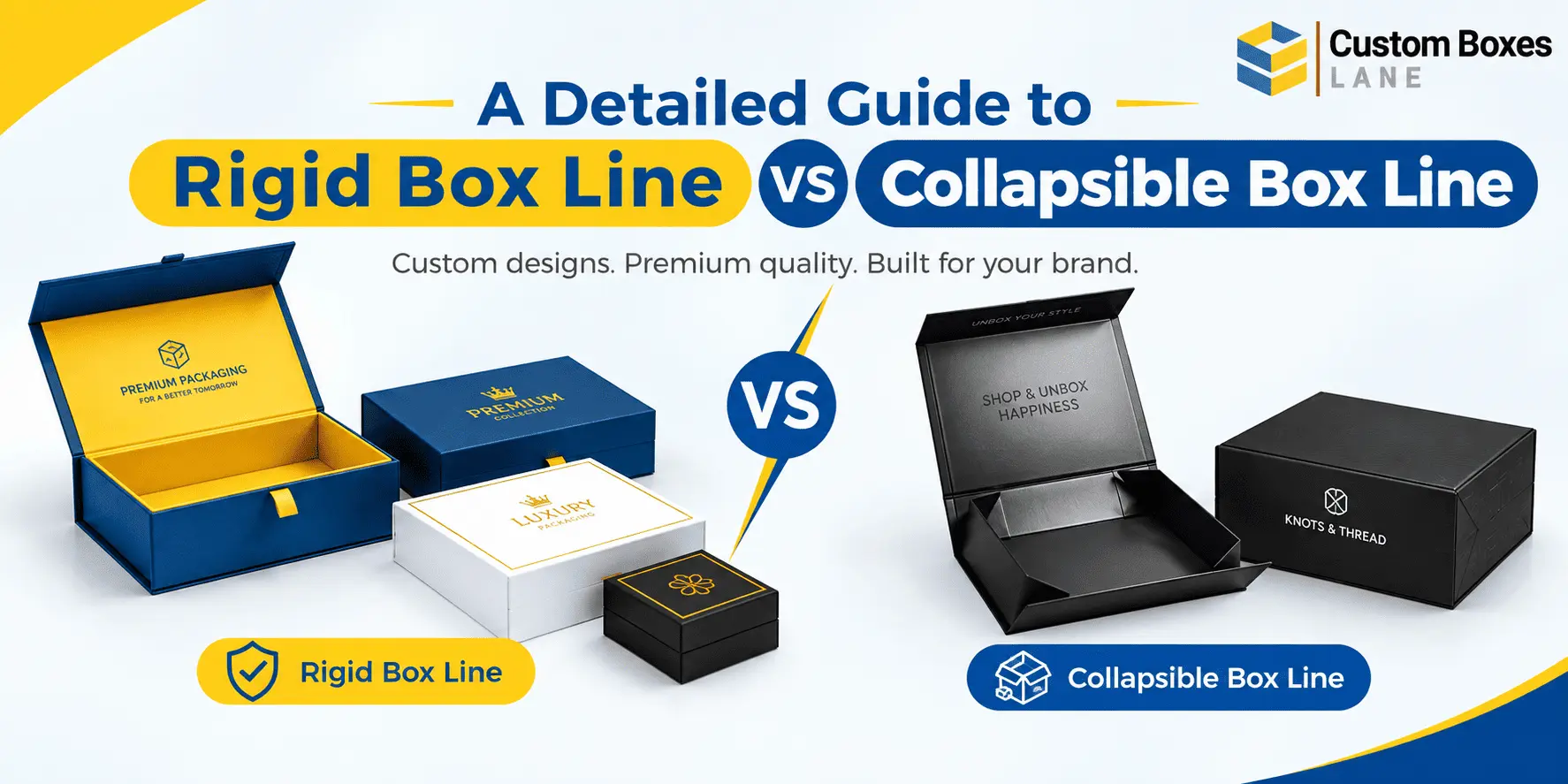
Table of Content
Imagine walking onto a factory floor to choose your next product packaging. On one side, a towering rigid box line shapes thick chipboard into flawless, fully formed hardcover boxes. On the other, a high-speed collapsible box line scores heavy cardstock into flat-folding wings.
Both types produce premium packaging. But their impact on your business couldn't be more different. Choosing between them is a key part of your logistics strategy. It affects the warehouse space you burn through and the shipping trucks you hire. And the exact unboxing experience your customer feels. Read on!
An Overview of a Rigid Box Line
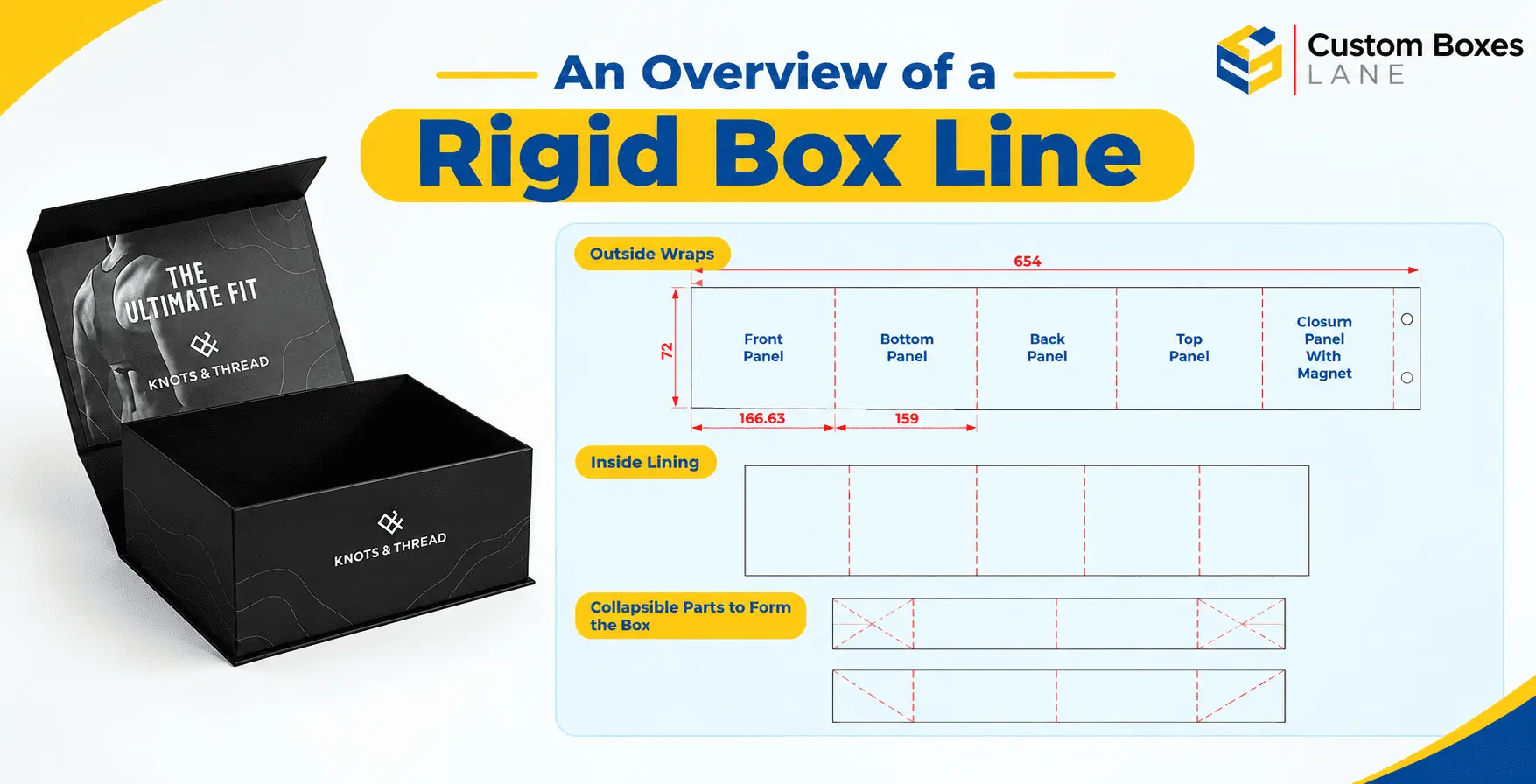
Consider a rigid box production line as the absolute factory setup for instant, top-shelf luxury packaging. Using advanced automated machines, this setup box takes heavy chipboard, wraps it in premium decorative paper, and produces fully formed, three-dimensional rigid stock boxes like the ones used for iPhones, high-end cosmetics, or luxury spirits.
The big win here is convenience. This is because the machines handle all the precise gluing, trimming, and assembly. And these rigid boxes leave the factory floor 100% finished and ready to be filled with products immediately.
But that doesn’t mean there is no catch. Because they cannot fold down. So, they take up their full physical size every single mile of the journey, meaning you are paying to store and ship a lot of empty air before your product even goes inside.
An Overview of a Collapsible Box Line
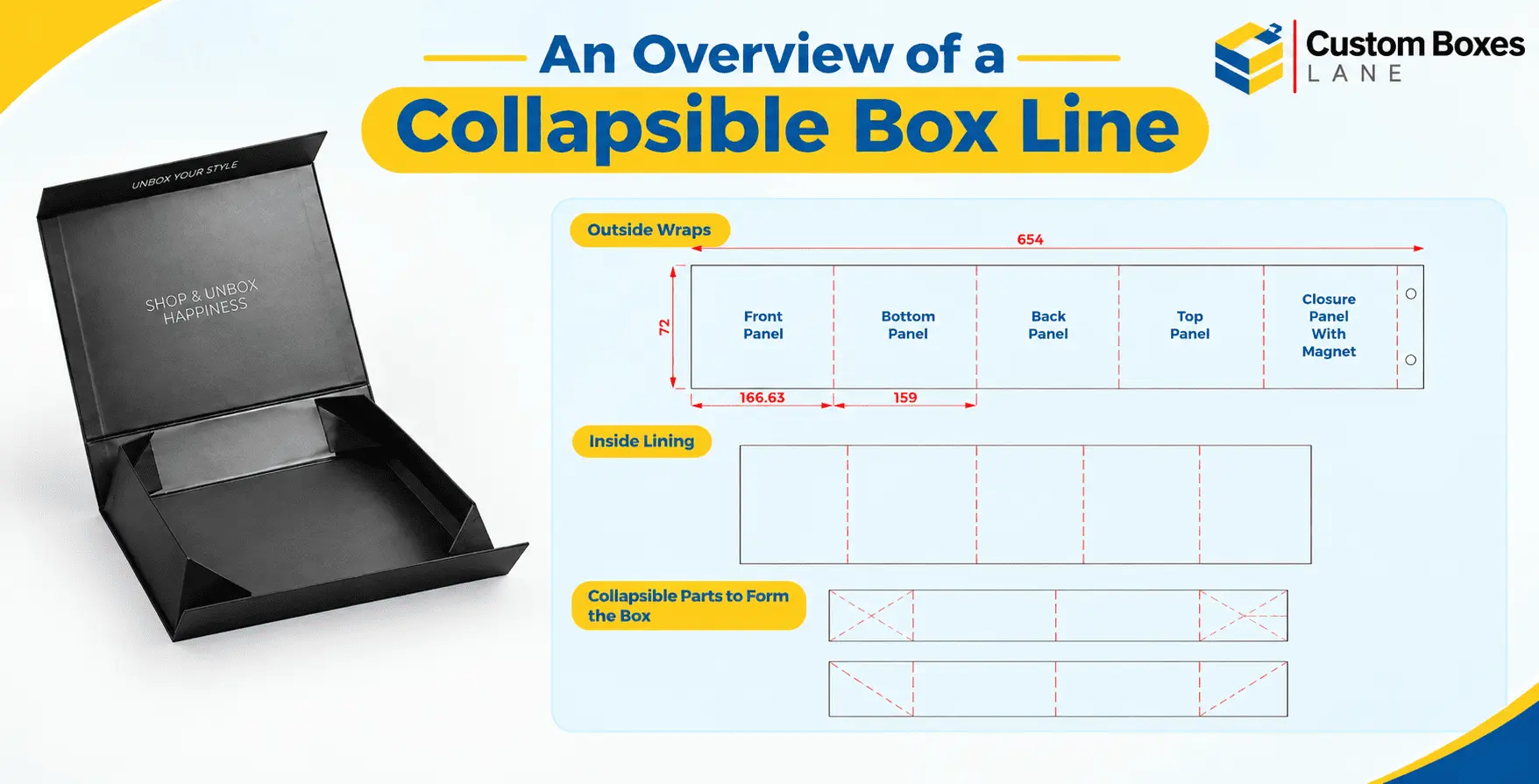
Now, picture a collapsible box production line as the absolute space-saving wizard for your supply chain. Instead of spitting out bulky, fully formed boxes, the high-tech machines cut and score heavy cardboard into sleek “folding wings” that lay completely flat.
This automated system can instantly adapt to different shapes and sizes, making everything from sweet boxes to luxury blue magnetic gift packaging with incredible speed and zero wasted material. The real superpower here is efficiency.
Because these flat-pack rigid boxes travel flat-packed, they reduce your shipping and warehouse volume by a massive 50% to 80%, saving you a significant chunk on freight costs.
The only trade-off? Since these pop-and-assemble boxes ship flat, someone or something down the line has to take a few seconds to snap them into their final 3D shape before they can be filled.
Key Differences at a Glance
|
Feature |
Traditional Rigid Box |
Collapsible Rigid Box (Foldable) |
|
Structure & Shape |
Non-collapsible; keeps its fixed form at all times |
Designed with fold lines and adhesive strips; ships flat |
|
Shipping & Freight Cost |
High (you pay to ship pre-assembled empty space/air). |
Low to Moderate (reduces shipping volume by 50% to 70%) |
|
Warehouse Storage Space |
High demand; bulky pre-assembled footprint |
Low demand; stacks flat in a fraction of the space |
|
Assembly / Labor |
Zero ($0) assembly needed; ready to pack immediately. |
Requires minor manual pop-up or peeling of adhesive strips at the packing station |
|
Perceived Luxury / Feel |
Maximum rigidity, heavy-duty wall weight, and seamless luxury presentation. |
High luxury feel (uses thick greyboard), though may have minor fold crease lines inside |
|
Unit Production Cost |
Higher due to heavy manual labor and pre-assembly handling. |
Moderately lower than traditional rigid, higher than a standard folding cartons |
|
Production Speed |
25–40 pieces per minute (typical range) |
Automated; 12 servo systems for precision |
Construction and Process
A traditional rigid box is like a “pre-built house.” It is made by cutting thick cardboard panels and taping the corners together into a permanent 3D shape. And then wrapping it in beautiful paper. Because it is built at the factory, it requires zero assembly when it arrives. And this box is ready to pack immediately, but it takes up a lot of space. That means your rigid box shipping cost rises.
On the other hand, a collapsible rigid box is like “high-tech origami.” It starts as a single flat sheet of cardboard. A machine cuts sharp “V” shapes halfway through the board to create perfect fold lines.
Then, a tough paper skin is glued over it to keep the joints from snapping, and tiny, super-strong neodymium magnets are hidden inside the walls. It ships completely flat, and then pops open by hand in seconds at the packing station, snapping into a solid, luxury V-groove rigid box with a satisfying magnetic click.
The Takeaway: Traditional boxes are designed to stay built, saving you assembly time but taking up massive warehouse space. Collapsible boxes use clever design to stay completely flat until you need them, giving you the exact same luxury feel while saving you huge amounts of storage and shipping room.
Storage and Logistics
Imagine shipping and storing thousands of boxes, but instead of moving actual products, you are paying to ship empty air. That is the reality of the space efficiency battle between these two packaging lines.
Traditional rigid boxes are space hogs. Because they are delivered pre-assembled and cannot be flattened without ruining them, they occupy their full three-dimensional volume from the factory floor all the way to the customer. This means they eat up massive amounts of warehouse space, fill up shipping containers way too fast, and drive up your storage costs per unit.
While foldable boxes are the ultimate space savers. They ship completely flat and sit in tight, perfectly stable stacks until you actually need them. Because you aren’t paying to transport trapped air, you can pack more boxes dramatically into a single shipment or container. Over time, this reduction of shipping volume translates into massive cost savings.
The Takeaway: If you are dealing with high warehouse rent, shipping products across the globe, or working out of a tight storage space, collapsible boxes give you a massive logistical edge. This is the exact reason why they have become the go-to choice for fast-growing e-commerce brands looking to scale without drowning in empty boxes.
Speed vs. Space: Production Line Performance
When it comes to pure manufacturing, both setups are automated beasts, but they are built for entirely different strategies. A rigid box line literally functions as a high-speed sprinter. It blasts out 25 to 40 flawless, ready-to-use boxes every single minute.
Thanks to built-in smart modules, it automatically trims rough edges and aligns everything perfectly with zero human error. Plus, swapping the machine over for a new box size takes just about 20 minutes, making it the go-to line when you need premium packaging made fast and filled immediately.
While talking about the collapsible box line, it serves as a masterclass in precision engineering. Instead of relying on brute speed, it uses 12 hyper-accurate servo systems and high-tech sensors that monitor exactly how much force is applied to fold the cardboard wings. The automation here isn't trying to build a giant 3D box. Instead, it focuses on creating a perfectly flat package that shrinks your transportation space by more than 80%.
The Takeaway: If your business demands immediate, high-speed output that is ready for the assembly line on day one, the rigid box line wins. But if you want to outsmart high warehousing costs and prioritize extreme logistical flexibility, the collapsible line is your champion.
The Real Cost Factors
Looking past the price tag of the machinery itself, the real financial battle between these two lines comes down to a classic trade-off: paying for shipping volume vs. paying for hands-on labor.
The rigid box line features higher ongoing logistics costs because you are paying to store and ship empty air inside every unfulfilled container. However, it completely eliminates on-site labor expenses because the boxes roll off the delivery truck 100% ready to fill.
Conversely, the collapsible box line reduces your ongoing freight bills by maximizing cargo space. The financial catch is that the flat-packed wings must be snapped together somewhere along the line, whether that means hiring manual packing labor at your fulfillment center, adding an automated assembly station, or designing the box to be popped open by the final customer.
A Realistic Look at the Math: 1,000 Boxes
Assume your product requires a standard, mid-sized premium black magnetic gift box measuring 30 x 20 x 10 cm (12 x 8 x 4 inches). Let's see how a batch of 1,000 units stacks up inside your warehouse and on a freight truck:
- Traditional Assembled Rigid Boxes: 1,000 fully erected boxes take up 6 cubic meters of physical space. When stacked onto standard US cargo pallets, this single order devours approximately 3 to 4 full pallet slots. Because US-domestic carriers bill by physical volume rather than actual weight for bulky items, you pay full dimensional weight rates for shipping empty air.
- Collapsible Box Line (Flat-Packed): Shipped flat, that exact same batch of 1,000 boxes collapses down to a height of just 1.5 cm per unit. The entire order takes up just 1.2 cubic meters of total volume. This means all 1,000 premium boxes pack neatly onto less than 1 single warehouse pallet slot.
The Final Cost Assessment: If your supply chain relies on long-distance domestic shipping and tight warehouse space, flat-packing cuts your storage footprint and transit cargo volume by 60 to 80%.
This massive freight discount easily cancels out the minor labor cost of spending 30 seconds popping each box open. However, if your fulfillment facility is right next door to your packaging manufacturer and warehouse space is cheap, the instant usability of a traditional rigid line might carry the day.
Applications for Each Production Line
When it comes to real-world applications, choosing your box line depends on your product's final destination. Since a rigid box line serves as a premium champion of high-end retail, it is designed specifically for premium items where the unboxing experience influences the value of the brand. These luxury rigid boxes are ideal for all premium products. Some of them are:
- Luxury Cosmetic Products
- High-End Jewelry and Watch Holders
- Top-Shelf Tobacco and Liquor Sets
- Collectible Hardcover Books
Coming to the collapsible box line, it acts as a secret weapon for scaling operations and digital commerce. It dominates spaces where you need premium looks but cannot afford to waste money shipping empty air. This makes collapsible rigid boxes a perfect fit for:
- Booming E-commerce
- Direct-to-Consumer (DTC) Brands
- High-Volume Gift and Sweet Assortments
- Cosmetics Companies Operating Out of Tight Warehouses
Tidbit: If you ship massive quantities over long distances and want to maximize profit margins without sacrificing a high-end feel, this line wins every time.
Finding the Perfect Machine Fit
In the end, choosing between a rigid or collapsible box line comes down to one simple question: Do you value instant retail readiness or massive shipping savings? The right decision simply balances your local hands-on labor costs against your shipping distances.
Pick the manufacturing strategy that fits your unique supply chain, and your bottom line will thank you. For this purpose, you can contact manufacturing experts at Custom Boxes Lane.
Collapsible rigid boxes are generally not quite as strong as traditional pre-formed rigid boxes, though a well-engineered collapsible box comes close and is durable enough for most retail and gift applications.
Yes, collapsible rigid boxes can weaken after repeated folding, but high-quality units resist damage if they are precision-engineered.
Yes, the end customer usually has to assemble a collapsible rigid box if it is shipped flat to them, or it arrives pre-assembled by the brand/fulfillment team, depending on how the product is sold.
A collapsible rigid box combines the heavy-duty, luxury feel and thick chipboard structure of a traditional rigid box with the flat-shipping and space-saving convenience of a folding carton.