

Rigid Box Gluing Explained: Adhesives, Application, Curing & Defects
Waqas Khan Pitafi 2026-10-20 11:08:00
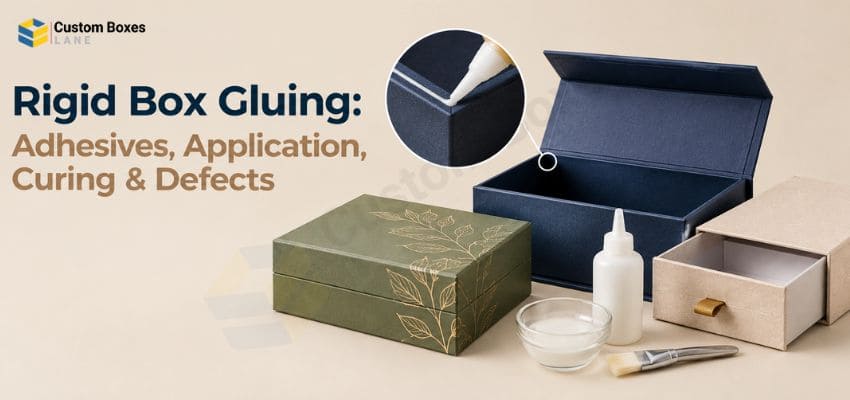
Table of Content
Gluing in rigid packaging is the process of bonding chipboard frames and decorative outer wraps together to build strong, premium boxes. The main decisions are adhesive types, application method and coverage, such as spot or full glue, and curing method. These controls determine whether a sample develops lifting, bubbling, warping, bleed-through, or weak corners. The same decisions apply to custom rigid boxes.
Key Takeaways:
- Rigid box gluing bonds chipboard with decorative wraps.
- Common adhesives include jelly, PVA, starch, EVA, and PUR.
- Glue can be applied manually or by machine.
- Full glue provides broad coverage; spot glue uses less adhesive.
- Curing ranges from seconds to 72 hours.
- Incorrect temperature and application can cause defects.
- Custom Boxes Lane has a 100-unit MOQ.
What is Gluing In Rigid Box Manufacturing?
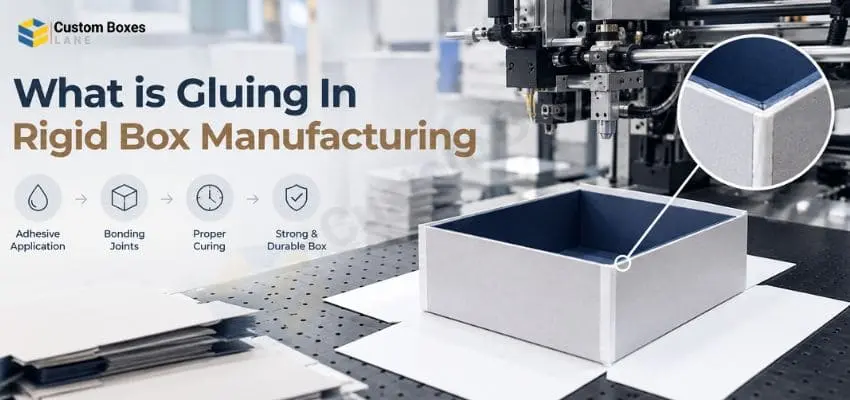
Rigid box gluing bonds the chipboard or greyboard core with its outer wrap and other components. Unlike folding cartons, rigid boxes depend on bonded construction rather than fold and- lock tabs.
The main glue points are wrap-to-board lamination, corner pasting, and insert or base attachment. The raw materials used in rigid boxes help determine the appropriate adhesive.
Where Gluing Sits in Production
Rigid box manufacturing generally follows the sequence:
- Board cutting
- V-groove scoring
- Corner pasting
- Glue application
- Board placement
- Edge turn-in
- Pressing
- Curing
- Insert fitting
- Magnet or closure fitting
Hand wrapping can be useful for specialty luxury rigid boxes, especially with textured or fabric wraps.
Adhesive Types Used in Rigid Boxes
|
Adhesive |
Typical Temperature |
Open Time |
Best use |
|
Jelly |
60–80°C |
Short |
Hand wrapping |
|
PVA |
Ambient |
Medium |
Paper-to-board |
|
Starch |
Ambient |
Medium |
Paper applications |
|
EVA hot melt |
160–180°C |
Seconds |
Fast production |
|
PUR |
120–140°C |
Strong bonds |
Strong bonds |
|
PSA |
Ambient |
Magnets/insert |
Magnets/inserts |
Jelly Glue
Jelly glue is an animal or gelatin adhesive that is usually used at temperatures between 60 and 80 degrees Celsius. It gives tack and stays flexible. It breaks down naturally over time. It is biodegradable. It is not vegan because it comes from animal sources.
PVA and Starch Adhesives
PVA, which stands for polyvinyl acetate, comes in different forms. There are white PVA, fast-tack versions, and cold-set types. Starch or dextrin glue is a water-based option that works well for bonding paper to board. It is inexpensive and environmentally friendly. If you use too much, it can cause warping in the material.
Hot Melt Adhesives
EVA hot melt glue works best at temperatures between 160 and 180 degrees Celsius. It sets quickly. Metallocene hot melt gives resistance to high heat. PUR reactive hot melt operates at around 120 to 140 degrees Celsius and hardens when it reacts with moisture. These are operating ranges, but always check the supplier’s data sheets for exact requirements.
Coated and Non-Paper Wraps
Laminated, touch, foil, leatherette,e and fabric wraps often need special adhesives, like PU dispersion or a specific type of hot melt. Standard PVA glue may not work well on these surfaces. It can. Lose its bond. So choose the adhesive based on the type of wrap being used.
Glue Application Method
Manual / Hand Gluing
Manual gluing uses a brush or hand roller and suits short runs, samples, specialty shapes, and complex angles. Coverage can be less consistent.
Roller / Wheel Gluing
Manual gluing uses a brush or hand roller and suits short runs, samples, specialty shapes, and complex angles. Coverage can be less consistent.
Roller / Wheel Gluing
A roller or wheel spreads an even adhesive layer across flat wrap sheets and is commonly used with PVA and jelly glue.
Nozzle/ Spray/ Bead Gluing
Nozzle and spray systems apply precise dots, beads, or patterns. They suit automated production and controlled spot-glue applications.
Spot Glue vs Full Glue
Full glue covers the required panel and provides broad adhesion. It suits luxury gift boxes, cosmetic sets, electronics, and jewelry packaging.
Spot glue uses dots, stripes, or edge beads. It reduces adhesive use but can increase delamination and wrap-lifting risk. A hybrid method uses full glue on panels and bead glue on turn-ins.
Full glue is generally preferred for laminated or soft-touch wraps. Spot glue may suit uncoated paper below approximately 128 gsm, subject to production confirmation.
How Scoring Affects the Glue Bond
V-groove depth should match 1.5–3 mm board thickness. A shallow groove can crack, while excessive depth can weaken the hinge. Wrap grain direction and turn-in allowance also affect the finished bond.
The groove should be selected according to the rigid stock and box geometry.
Curing Methods and Drying Times
|
Method |
Adhesive |
Handle Time |
Full Cure |
|
Cooling |
Hot melt |
Seconds |
Minutes |
|
Thermal |
PVA |
Minutes-hours |
Hours |
|
LED-UV |
UV adhesive |
Seconds |
Seconds |
|
Air/moisture |
PUR |
Hours |
24–72 hours |
|
Air drying |
PVA |
Hours |
12–24 hours |
LED-UV curing commonly uses 365–415 nm. Finished boxes should generally remain around 45–55% relative humidity to reduce post-cure warping.
Process Controls That Prevent Failures
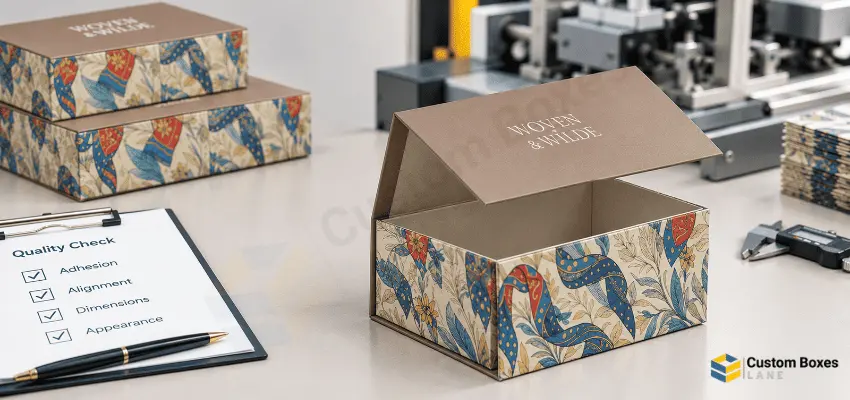
Adhesive must match the substrate. Paper can suit PVA OR starch, while foil, leatherette, fabric, and laminated wraps may require specialized formulas.
Typical temperatures include 60–80°C for jelly, 160–180°C for EVA, and 120–140°C for PUR. Excess heat can cause charring, while insufficient heat can cause poor flow and stringing.
Open time is the workable period before adhesive loses suitable tack. Set time is when the bond becomes stable, while press dwell is the period pressure remains on the bond. Application weight and even pressing also help prevent bleed-through and bubbles.
Common Glue Defects
|
Defect |
Likely Cause |
|
Wrap lifting |
Weak coverage |
|
Bubbling |
Uneven glue |
|
Bleed-through |
Excess adhesive |
|
Warping |
Excess water-based glue |
|
Delamination |
Weak bond |
|
Stringing |
Low hot-melt temperature |
|
Charring |
Excess heat |
|
Magnet loosening |
Poor adhesive or pocket |
Corner lift is particularly noticeable on custom jewelry boxes. Buyers should inspect corners, glue lines, bubbles, and closures before approval.
Gluing for Special Features
Magnetic closures may use a magnet pocket, PSA, or hot melt depending on construction. Collapsible rigid boxes require a fully bonded hinge skin; foldable gift boxes should not rely on spot glue across the hinge.
EVA foam, die-cut paperboard trays, and velvet-lined trays also require adhesive compatibility. Fabric and leatherette wraps may need specialized formulas.
Sustainability of Rigid Box Adhesives
Jelly glue is biodegradable but animal-derived and not vegan. PVA and starch adhesives are water-based, generally low VOC, and may be recyclable in suitable paper streams. Hot melt and PUR are synthetic adhesives in controlled layers.
What Buyers Should Check on a Sample
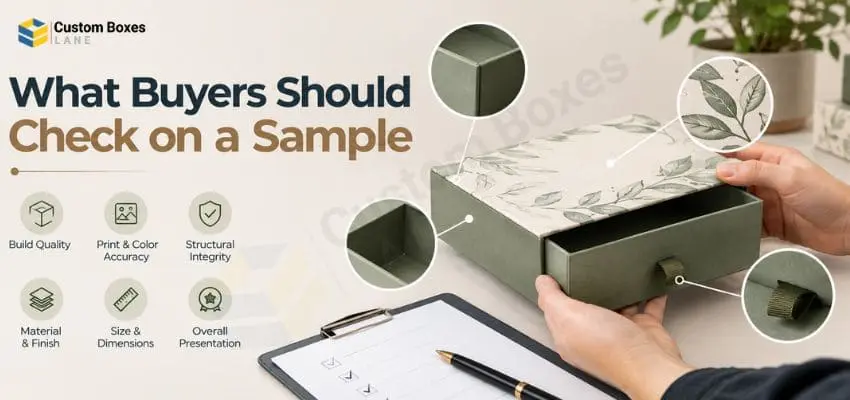
Check these seven points before approving production:
- Flatness after 48 hours.
- Corner adhesion.
- Bubbles under raking light.
- Glue bleed-through.
- Glue strings on edges.
- Magnets pull strength.
- Lid fit after 20 opening cycles.
For cosmetic boxes, also check magnetic alignment and closure performance.
Custom Boxes Lane Production Facts
Custom Boxes Lane is based in Jacksonville, Florida. The supplied production brief specifies a 100-unit MOQ, 10–12 business days, rush service on request, free contiguous-US shipping, AI/PDF/PNG artwork, and unlimited free proof revisions. Production should confirm the exact adhesive and application method before publication.
Rigid boxes can use jelly, PVA, starch, EVA hot melt, PUR, or pressure-sensitive adhesives. Selection depends on the wrap, board, construction, and required bond.
Jelly glue is an animal- or gelatin-based adhesive typically heated to 60–80°C. It is biodegradable and flexible but is not vegan.
Neither is universally better. PVA suits many paper-to-board applications, while hot melt offers rapid setting and supports automated production.
Glue can be applied manually using brushes or rollers, through roller systems, or with nozzle, spray, and bead equipment for controlled patterns.
Full glue covers the bonding panel, while spot glue uses dots, stripes, or beads. Spot glue uses less adhesive but may increase wrap-lifting risk.
Rigid box warping can result from excessive water-based glue, uneven application, improper pressing, or unsuitable humidity during curing and storage.
Hot melt can become handleable within seconds. PVA may require 12–24 hours for full strength, while PUR can require 24–72 hours.
